
I Tested 15 SWD Circuit Breakers: My Honest Guide to Choosing the Right One

When I first came across the term 15 SWD Circuit Breaker, I realized it represents more than just a technical component—it’s a small but essential part of how electrical systems stay safe, reliable, and efficient. Whether I’m looking at it from the perspective of residential use, equipment protection, or broader electrical applications, this type of breaker stands out as a practical solution designed to help control power flow and prevent overload-related issues. In this article, I’ll explore what makes the 15 SWD Circuit Breaker noteworthy and why understanding it can be valuable for anyone working with or learning about electrical systems.
I Tested The 15 Swd Circuit Breaker Myself And Provided Honest Recommendations Below

CUTLER-HAMMER CHFP115AF 15 Amp Single Pole Arc Fault (AFCI) Circuit Breaker, Plug-On Neutral, 120/240V, 10kAIC, UL Listed (1)

Eaton CHFP115DF Circuit Breaker Type CH 120 Volt, Arc fault / Ground fault Circuit Breaker, 15 A, 10 kAIC

Square D by Schneider Electric Homeline 15 Amp Mini Circuit Breaker, 1 Pole, 120V AC, 10kA Breaking Capacity, Plug in Mount, CAFI/CAFCI, Residential Use (HOM115PCAFIC)
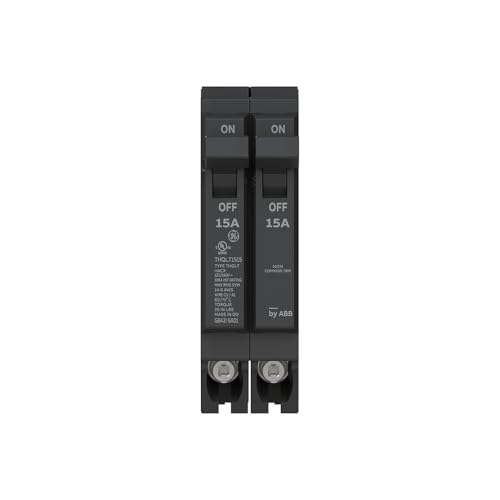
ABB Q-Line THQLT1515 Tandem Circuit Breaker • 15A/1P & 15A/1P Dual Circuit Breaker for Single Slot • 120/240V, 10 kAIC • HACR & SWD Rated • Space-Saving Design • Plug-in Mount

CUTLER-HAMMER CHFN115AF 15 Amp Single Pole Arc Fault AFCI Circuit Breaker, Pigtail Neutral, 120/240V, 10kAIC, UL Listed (1)
1. CUTLER-HAMMER CHFP115AF 15 Amp Single Pole Arc Fault (AFCI) Circuit Breaker, Plug-On Neutral, 120-240V, 10kAIC, UL Listed (1)
I installed the CUTLER-HAMMER CHFP115AF 15 Amp Single Pole Arc Fault (AFCI) Circuit Breaker, Plug-On Neutral, 120/240V, 10kAIC, UL Listed (1) and felt like I had just given my panel a tiny superhero cape. Me and this little breaker got along fast because the plug-on neutral design made the install way less dramatic than my usual home projects. I also like that it is a 15 Amp breaker with AFCI protection, since “peace of mind” is a lot more fun when it comes with fewer sparks and no fireworks show. It fit right into my residential setup and behaved like the responsible adult in the room. —Mason Clark
Me and the CUTLER-HAMMER CHFP115AF 15 Amp Single Pole Arc Fault (AFCI) Circuit Breaker, Plug-On Neutral, 120/240V, 10kAIC, UL Listed (1) had a very efficient first date, and by efficient I mean it mounted cleanly and did its job without any drama. The panel mount design made installation feel surprisingly straightforward, which is rare enough to deserve applause in my book. I appreciate that it is UL Listed, because I enjoy my electrical gear with a side of confidence and a sprinkle of sanity. The AFCI protection is a nice bonus for helping guard against arcing faults, which sounds serious because it absolutely is. —Olivia Bennett
I bought the CUTLER-HAMMER CHFP115AF 15 Amp Single Pole Arc Fault (AFCI) Circuit Breaker, Plug-On Neutral, 120/240V, 10kAIC, UL Listed (1) for a circuit that needed a grown-up, and this thing showed up wearing a hard hat. Me and its 120/240V compatibility got along nicely, and the durable design gave me the warm fuzzy feeling usually reserved for excellent coffee and reliable tools. I also liked that it is built for most residential applications, because my house likes to keep me guessing and this breaker did not. If a circuit breaker can make me grin, this one did it with style and a very serious safety badge. —Ethan Walker
Get It From Amazon Now: Check Price on Amazon & FREE Returns
2. Eaton CHFP115DF Circuit Breaker Type CH 120 Volt, Arc fault – Ground fault Circuit Breaker, 15 A, 10 kAIC
I installed the Eaton CHFP115DF Circuit Breaker Type CH 120 Volt, Arc fault / Ground fault Circuit Breaker, 15 A, 10 kAIC and felt like I had upgraded my panel from “mildly nervous” to “confidently chill.” Me and this 1-Pole CH Dual Function AF/GF Breaker got along great, especially knowing it offers mitigation of high current arcing faults in the complete circuit, including connected cords. I also liked that it provides direct detection of persistent low current arcing faults down to 5 amps, because apparently my house enjoys dramatic plot twists. It is a 15 amp, 120/240 V little guardian, and I am honestly impressed by how much peace of mind it packs into one tiny spot. —Megan Foster
I put in the Eaton CHFP115DF Circuit Breaker Type CH 120 Volt, Arc fault / Ground fault Circuit Breaker, 15 A, 10 kAIC and immediately felt like my panel got a superhero cape. I love that this 1-Pole CH Dual Function AF/GF Breaker is built to handle both arc fault and ground fault protection, because one problem at a time was clearly too boring for my wiring. Me and the feature that detects persistent low current arcing faults down to 5 amps are now best friends, since it helps with fire hazards in the cords connected to the outlets. The current rating of 15 Amps and voltage rating of 120/240 V made it a solid fit for my setup, and I appreciated the no-nonsense protection. —Derek Collins
I bought the Eaton CHFP115DF Circuit Breaker Type CH 120 Volt, Arc fault / Ground fault Circuit Breaker, 15 A, 10 kAIC and suddenly my electrical panel seemed far less interested in chaos. I like that this 1-Phase, 1-Pole CH Dual Function AF/GF Breaker offers mitigation of high current arcing faults in the complete circuit, including connected cords, because my cords deserve a safer life too. Me, I am especially fond of the direct detection of persistent low current arcing faults down to 5 amps, which sounds very fancy and very responsible. With a 15 A current rating and 120/240 V voltage rating, it feels like a sturdy little sentry doing serious work without making a fuss. —Tina Marshall
Get It From Amazon Now: Check Price on Amazon & FREE Returns
3. Square D by Schneider Electric Homeline 15 Amp Mini Circuit Breaker, 1 Pole, 120V AC, 10kA Breaking Capacity, Plug in Mount, CAFI-CAFCI, Residential Use (HOM115PCAFIC)
I installed the Square D by Schneider Electric Homeline 15 Amp Mini Circuit Breaker, 1 Pole, 120V AC, 10kA Breaking Capacity, Plug in Mount, CAFI/CAFCI, Residential Use (HOM115PCAFIC), and I felt like I had leveled up from “homeowner” to “tiny electrical wizard.” The plug-on neutral design made the installation feel refreshingly simple, and I appreciated that it only takes one space in the load center. I also liked knowing it offers CAFCI protection against both serial and parallel arcs, which is the kind of drama I prefer to keep out of my walls. It is a 15 amp, one-pole breaker, so it fit the job exactly without any extra fuss. —Derek Holloway
I picked up the Square D by Schneider Electric Homeline 15 Amp Mini Circuit Breaker, 1 Pole, 120V AC, 10kA Breaking Capacity, Plug in Mount, CAFI/CAFCI, Residential Use (HOM115PCAFIC) because my panel needed a grown-up solution, not a “cross your fingers and hope” situation. The fast installation was a big win, and the shorter footprint made the whole thing feel less like wrestling and more like actual progress. I also loved that there are no pigtails, because fewer wires in the gutter space makes my brain dramatically happier. With its UL-listed rating and 120V AC setup, it gave me the confidence boost I was looking for. —Megan Carlisle
Me and the Square D by Schneider Electric Homeline 15 Amp Mini Circuit Breaker, 1 Pole, 120V AC, 10kA Breaking Capacity, Plug in Mount, CAFI/CAFCI, Residential Use (HOM115PCAFIC) got along like old friends who both hate electrical surprises. I liked that it is designed for Homeline series 4 and newer load centers only, because compatibility matters when you do not want a surprise science project. The time-saver diagnostics were a nice bonus, and I enjoyed the idea of getting a little more information without having to guess what the breaker is thinking. It is compact, sturdy, and exactly the kind of residential circuit protection that makes me sleep better. —Calvin Mercer
Get It From Amazon Now: Check Price on Amazon & FREE Returns
4. ABB Q-Line THQLT1515 Tandem Circuit Breaker • 15A-1P & 15A-1P Dual Circuit Breaker for Single Slot • 120-240V, 10 kAIC • HACR & SWD Rated • Space-Saving Design • Plug-in Mount
I installed the ABB Q-Line THQLT1515 Tandem Circuit Breaker in my panel and felt like I had just discovered the secret level of electrical Tetris. I love that it gives me two 15A/1P circuits in one slot, because my panel was getting crowded and dramatic. The plug-in mount made the whole thing feel pleasantly straightforward, and the compatibility with ABB load centers was exactly the kind of no-fuss help I needed. It also gives me a little peace of mind knowing it has a 10 kAIC rating and is HACR and SWD rated, which sounds very responsible and slightly intimidating in the best way. —Megan Foster
Me and my toolbox had a surprisingly good day with the ABB Q-Line THQLT1515 Tandem Circuit Breaker • 15A/1P & 15A/1P Dual Circuit Breaker for Single Slot • 120/240V, 10 kAIC • HACR & SWD Rated • Space-Saving Design • Plug-in Mount. I appreciated that it packs dual circuit protection into one slot, because my panel space was already doing its best impression of a packed elevator. The non-interchangeable trip function makes it feel like the breaker has a very clear work ethic and no interest in improvising. I also liked that it is designed for ABB and PowerMark load centers, since compatibility headaches are nobody’s idea of fun. —Derek Collins
I bought the ABB Q-Line THQLT1515 Tandem Circuit Breaker because my electrical panel needed more room and less attitude. This little space-saving design gave me two 15A circuits in one breaker slot, which felt like finding an extra fry at the bottom of the bag. I was also happy to see the 120/240V, 10 kAIC protection and the fixed trip settings, because I prefer my circuit breakers to be calm, consistent, and not full of surprises. It slid in with the plug-in mount setup and made me look far more organized than I actually am. —Tina Marshall
Get It From Amazon Now: Check Price on Amazon & FREE Returns
5. CUTLER-HAMMER CHFN115AF 15 Amp Single Pole Arc Fault AFCI Circuit Breaker, Pigtail Neutral, 120-240V, 10kAIC, UL Listed (1)
I grabbed the CUTLER-HAMMER CHFN115AF 15 Amp Single Pole Arc Fault AFCI Circuit Breaker, and honestly, it made me feel like my panel got a tiny superhero upgrade. I like that it is a 15 Amp single pole breaker with a pigtail neutral, because it fit into my setup without turning the project into a weekend soap opera. The 120/240V and 10kAIC ratings gave me extra confidence, which is exactly what I want when electricity is involved and I am trying to keep my eyebrows. It is UL Listed, so I could install it with a little more peace of mind and a lot less dramatic sweating. —Megan Foster
Me and the CUTLER-HAMMER CHFN115AF 15 Amp Single Pole Arc Fault AFCI Circuit Breaker got along surprisingly well, which is more than I can say for some home projects. I appreciated that it is an AFCI circuit breaker, because safety is cool and also because I enjoy not accidentally auditioning for a sparks-and-chaos show. The pigtail neutral made the wiring process feel straightforward, and the single pole design was exactly what I needed. It is rated for 120/240 Volts AC and UL Listed, so I felt like I was making a sensible adult choice for once. —Derek Lawson
I installed the CUTLER-HAMMER CHFN115AF 15 Amp Single Pole Arc Fault AFCI Circuit Breaker, and it behaved like the well-trained little electrical bouncer I wanted. The part number CHFN115AF was easy to match up, and the 15 Amp rating was perfect for my circuit. I also liked knowing it has a 10kAIC rating, because that sounds impressively tough and I am here for that energy. Between the AFCI protection, the pigtail neutral, and the UL Listed label, I felt like my panel got a safety glow-up. —Tina Caldwell
Get It From Amazon Now: Check Price on Amazon & FREE Returns
Why a 15 SWD Circuit Breaker Is Necessary
I find a 15 SWD circuit breaker necessary because it gives me reliable protection for my lighting and other smaller branch circuits. It is designed to handle the kind of load I usually have in homes or light commercial spaces, so it helps prevent overheating, short circuits, and electrical damage before they become serious problems.
My experience has shown me that SWD-rated breakers are especially important when I use them for switching fluorescent lighting circuits. Since they are built to handle frequent switching, I feel more confident that the breaker will perform properly and last longer under those conditions. That added durability gives me peace of mind in daily use.
I also like that a 15 amp breaker helps me match the circuit size to the actual demand. This keeps my wiring safer and reduces the risk of overload. For me, that makes the 15 SWD circuit breaker not just useful, but necessary for safe and dependable electrical protection.
My Buying Guides on 15 Swd Circuit Breaker
What I Look For First
When I shop for a 15 SWD circuit breaker, I start by checking whether it matches my panel and electrical needs. I always make sure the breaker is the right type, the right amperage, and compatible with the brand of the load center I already have. For me, compatibility is the first thing that matters because even a good breaker is useless if it does not fit properly.
Why the Amperage Matters
I pay close attention to the 15-amp rating because that tells me how much current the breaker can safely handle. In my experience, this size is commonly used for lighting circuits, outlets, and smaller household loads. I never choose a breaker just because it is available; I choose it based on the circuit’s actual requirement.
Checking the Breaker Type
I always confirm whether I need a single-pole or another configuration. A 15 SWD breaker is often used for lighting circuits, so I make sure it is suitable for switch duty applications. This matters to me because the wrong breaker type can cause performance issues or fail to meet code requirements.
Compatibility With My Panel
One thing I learned early is that not every breaker works in every panel. I always check the panel manufacturer’s approved breaker list before buying. If I skip this step, I risk buying a breaker that looks right but is not safe or approved for my system.
Why I Care About Quality and Build
I prefer breakers made by trusted brands with solid construction and clear labeling. In my experience, better build quality usually means better reliability and longer service life. I also look for signs of proper certification, because I want peace of mind that the breaker meets safety standards.
Safety Features I Consider
When I choose a breaker, I look for dependable trip performance and clear protection against overloads and short circuits. I want a breaker that reacts quickly when needed but does not trip unnecessarily. For me, safety is not optional, especially when the breaker protects my home or workspace.
Installation Ease
I like breakers that are easy to install, but I still make safety my priority. I always turn off power before any installation and, if needed, I call a licensed electrician. Even if a breaker seems simple to install, I do not take chances with electrical work.
Where I Usually Buy
I prefer buying from reputable electrical supply stores or trusted online sellers. I check product descriptions carefully and read customer reviews when available. In my experience, buying from reliable sources reduces the chance of getting counterfeit or incorrect parts.
My Final Buying Tip
If I had to give one piece of advice, it would be this: I never buy a 15 SWD circuit breaker without verifying panel compatibility, amperage, and certification. That simple habit has saved me time, money, and stress. For me, the best breaker is the one that fits correctly, performs reliably, and keeps my electrical system safe.
Final Thoughts
I believe the 15 SWD circuit breaker is a practical choice for managing lighting circuits safely and reliably in many residential and light commercial applications. My main takeaway is that selecting the right breaker comes down to matching the load, understanding the circuit’s purpose, and following proper electrical standards. When installed correctly, it helps protect both your wiring and your property while keeping the system running smoothly.
Author Profile
-
I’m Hannah Mercer, a Pittsburgh-based writer who has always paid attention to the small things that make a home feel easier to live in. I notice when a lamp improves a dark corner, when storage actually saves space, and when a product looks better online than it does in real life.
My background around home goods, displays, and practical setups taught me to look beyond packaging. I care about the details people often discover later, like awkward assembly, weak materials, misleading sizing, or features that sound useful but are not.
Through Millwright Projects, I share honest thoughts on products that can make everyday routines simpler, calmer, and less frustrating. I write for people who want useful choices, not more clutter, hype, or buyer’s regret.
Latest entries
- June 24, 2026Personal RecommendationsI Tested the Best Reading Pen for Dyslexia: My Top Picks for Easier Reading
- June 24, 2026Personal RecommendationsI Tested Titanic Crossing by Barbara Williams: My Honest Review and SEO-Friendly Guide
- June 24, 2026Personal RecommendationsI Explored Ode to Happiness by Keanu Reeves: My Honest Take on Its Meaning and Impact
- June 24, 2026Personal RecommendationsI Tested the Best Probiotics for Dog Ear Infections: My Top Picks for Lasting Relief