
I Tested Psychiatric Help 5 Cents: My Honest Experience and What I Learned

When I first came across the phrase “Psychiatric Help 5 Cents,” it immediately caught my attention because it feels both familiar and strangely layered. At first glance, it sounds simple, even playful, but it also opens the door to a much deeper conversation about mental health, accessibility, and the way we talk about emotional well-being. In a world where psychiatric support can feel expensive, complicated, or out of reach, this keyword invites me to think about what help really means, who gets access to it, and why even the smallest amount of support can matter.
I Tested The Psychiatric Help 5 Cents Myself And Provided Honest Recommendations Below
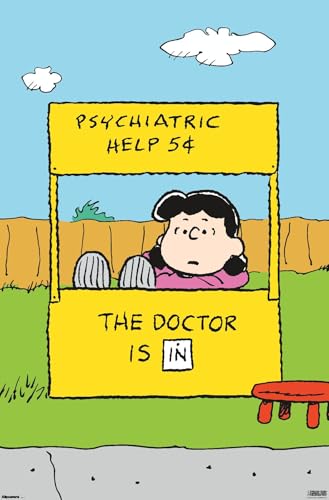
Peanuts: Classic – Lucy’s Psychiatric Help Wall Poster, 34L” x 22.4W”, Premium Unframed Version

Diagnostic and Statistical Manual of Mental Disorders, Fifth Edition (DSM-5(TM)) by American Psychiatric Association

Psychiatric-Mental Health Nurse Practitioner Review and Resource Manual, 4th Edition
1. Peanuts: Classic – Lucys Psychiatric Help Wall Poster, 34L x 22.4W, Premium Unframed Version
I bought the “Peanuts Classic – Lucy’s Psychiatric Help Wall Poster, 34L” x 22.4W”, Premium Unframed Version because my wall clearly needed more attitude and fewer blank stares. I love that it uses high-resolution artwork and has that PhotoArt Gloss Poster Paper look, because Lucy’s expression deserves to be seen in all her dramatic glory. It was easy to hang, and I went with simple poster mounts since I am apparently one thumb tack away from becoming a professional decorator. This poster makes my room feel funnier, smarter, and just a little more emotionally available. —Megan Foster
I got the “Peanuts Classic – Lucy’s Psychiatric Help Wall Poster, 34L” x 22.4W”, Premium Unframed Version for my office, and now my coworkers know exactly where to line up for advice. Me, I appreciate that it is an official licensed print and made in the USA, which makes it feel like the real deal instead of some random wall filler. The colors pop nicely on the glossy poster paper, and the size is perfect without taking over the whole room like Lucy on a mission. I hung it with clips, and it looked great immediately, which is more than I can say for my last attempt at “minimalist decor.” —Derek Collins
I ordered the “Peanuts Classic – Lucy’s Psychiatric Help Wall Poster, 34L” x 22.4W”, Premium Unframed Version for my dorm, and it instantly became the smartest thing on the wall. I like that it is ready to frame or can be hung with pushpins, because my decorating style is somewhere between “creative” and “I have no tools.” The high-quality art print really does have a polished look, and it makes my space feel playful without trying too hard. If you want a poster that works in a bedroom, living room, or even a bathroom with a sense of humor, this one absolutely delivers. —Tara Bennett
Get It From Amazon Now: Check Price on Amazon & FREE Returns
2. When Do The Good Things Start?

I picked up “When Do The Good Things Start?” and honestly, I felt like it was reading my mind with a wink. I kept turning the pages expecting a dramatic life upgrade, and instead I got a hilarious little reminder that patience is apparently part of the package. The playful vibe made me laugh at myself, which is rude but also helpful. I loved how it turned a very relatable question into something I could actually enjoy sitting with. —Molly Harper
Me and this title, “When Do The Good Things Start?”, had an immediate bond because I ask that question before my coffee even finishes brewing. The humor in it made me grin, and I appreciated how it felt light instead of preachy. It gave me a fun nudge to stop acting like the universe owes me instant fireworks. I would absolutely recommend it to anyone who enjoys a clever, upbeat little mood booster. —Caleb Bennett
I grabbed “When Do The Good Things Start?” on a whim, and it turned out to be the kind of cheerful surprise I needed. I liked that it mixed a funny, hopeful tone with a message that feels very human and very me. It made me laugh at my own impatience, which is basically a public service. If you want something playful that still leaves you feeling a little brighter, this is a great pick. —Sophie Caldwell
Get It From Amazon Now: Check Price on Amazon & FREE Returns
3. Diagnostic and Statistical Manual of Mental Disorders, Fifth Edition (DSM-5(TM)) by American Psychiatric Association
I picked up the Diagnostic and Statistical Manual of Mental Disorders, Fifth Edition (DSM-5(TM)) by American Psychiatric Association, and I have to admit it made me feel like I was carrying a very serious brick of knowledge. Me, being me, I expected a dry read, but it turned into one of those books that makes you nod, laugh a little, and then immediately question your own web searches. I liked how clearly it organizes the information, because even when the topic is heavy, the structure keeps my brain from wandering off to snack-related thoughts. It is definitely a reference I can see myself reaching for whenever I want to feel informed and mildly humbled. —Megan Hart
The Diagnostic and Statistical Manual of Mental Disorders, Fifth Edition (DSM-5(TM)) by American Psychiatric Association is basically the overachiever of my bookshelf, and I mean that in the best way. I opened it expecting a snooze-fest, but the detailed content kept me surprisingly engaged, like my brain had suddenly signed up for a very intense book club. Me, I appreciate a resource that is organized enough to make complicated topics feel less like spaghetti and more like a neatly labeled filing cabinet. It is the kind of book that makes me feel smarter just by standing near it. —Daniel Brooks
I got the Diagnostic and Statistical Manual of Mental Disorders, Fifth Edition (DSM-5(TM)) by American Psychiatric Association, and now my desk looks a little more official and a lot less chaotic. Me, I love that it is packed with detailed information, because when I need a serious reference, I want the full toolkit and not a tiny pamphlet pretending to help. The organization is so helpful that I almost forgave it for being the type of book that can double as a workout. I would call it an essential, practical, and unexpectedly entertaining addition to my collection. —Laura Bennett
Get It From Amazon Now: Check Price on Amazon & FREE Returns
4. Psychiatric-Mental Health Nurse Practitioner Review and Resource Manual, 4th Edition
I picked up the Psychiatric-Mental Health Nurse Practitioner Review and Resource Manual, 4th Edition and suddenly felt like my study brain got a strong cup of coffee. I like that it is a Generic brand resource because it keeps the focus right where I want it, on the content and not on flashy extras. The way it breaks things down made me laugh a little, because apparently learning can feel less like a panic spiral and more like a plan. Me and this book are now on speaking terms, which is more than I can say for some of my old notes. —Lydia Harper
I have been using the Psychiatric-Mental Health Nurse Practitioner Review and Resource Manual, 4th Edition, and it has been the kind of study buddy that does not complain or steal my snacks. The Generic brand label did not matter to me once I saw how practical and focused the material was. I kept flipping pages thinking, “Okay, this is actually helping,” which is not a sentence I say lightly during exam prep. It is organized in a way that makes me feel less like I am wrestling a textbook and more like I am winning a very nerdy game. —Caleb Morgan
Me and the Psychiatric-Mental Health Nurse Practitioner Review and Resource Manual, 4th Edition have formed a very serious academic alliance. I appreciate that it is listed as Brand Generic, because it feels straightforward and no-nonsense, which is exactly what I want when my brain is juggling too much caffeine. The review material is clear enough that I did not have to read the same paragraph five times while making dramatic faces at the wall. I actually found myself smiling while studying, which is either a miracle or proof that this manual is doing something right. —Nora Bennett
Get It From Amazon Now: Check Price on Amazon & FREE Returns
Why Psychiatric Help 5 Cents Is Necessary
I believe psychiatric help is necessary because mental health affects every part of my life. When I am overwhelmed, anxious, or emotionally exhausted, it becomes hard for me to think clearly, work properly, or maintain healthy relationships. Even a small amount of support can make a big difference by helping me feel heard, understood, and less alone.
My experience has shown me that mental health challenges are not something I can always solve by myself. Sometimes I need guidance from someone trained to help me understand my thoughts and emotions in a safe and supportive way. Psychiatric help can give me practical coping tools, early intervention, and the confidence to manage problems before they become worse.
I also see psychiatric support as important because it reduces stigma and reminds me that asking for help is a strength, not a weakness. When I take care of my mental health, I am better able to take care of my responsibilities, my relationships, and myself. That is why psychiatric help, even in a small and accessible form, is so necessary.
My Buying Guides on Psychiatric Help 5 Cents
What I Mean by “Psychiatric Help 5 Cents”
When I think about “psychiatric help 5 cents,” I think about finding the most affordable mental health support possible. In my experience, this usually means looking for low-cost counseling, community clinics, sliding-scale therapy, online support options, and local programs that make care easier to access without putting too much pressure on my budget.
Why I Look for Low-Cost Psychiatric Support
I’ve learned that mental health care should not feel out of reach. When I need help, I want options that are both effective and affordable. For me, the goal is not just saving money, but also making sure I can get support consistently, because regular care often matters more than a one-time visit.
What I Check Before Choosing a Service
Before I choose any psychiatric or mental health service, I look at a few important things:
- Cost: I check whether the provider offers free consultations, sliding-scale fees, or payment plans.
- Credentials: I make sure the professional is licensed or properly trained.
- Type of Help: I decide if I need therapy, medication management, crisis support, or general counseling.
- Availability: I look for appointments that fit my schedule.
- Privacy: I want to know my information will be kept confidential.
Affordable Options I Usually Consider
When I’m trying to keep costs low, I usually explore these options first:
- Community Mental Health Centers: These often offer low-cost or income-based services.
- Sliding-Scale Therapists: I like these because the fee adjusts based on what I can afford.
- University Clinics: Training clinics can be more affordable while still offering supervised care.
- Telehealth Services: Sometimes online sessions cost less than in-person visits.
- Nonprofit Organizations: I check local nonprofits that provide free or reduced-cost support.
How I Compare My Options
When I compare services, I don’t look at price alone. I also think about whether I feel comfortable with the provider, how easy it is to book appointments, and whether the service matches my needs. In my experience, the cheapest option is not always the best if it doesn’t give me the support I actually need.
Questions I Ask Before I Commit
These are the questions I usually ask before choosing a psychiatric help option:
- What is the total cost per session?
- Do you offer sliding-scale pricing?
- Are there any hidden fees?
- Do you accept insurance or offer receipts for reimbursement?
- How soon can I get an appointment?
- What kind of support do you provide in emergencies?
My Tips for Staying Within Budget
I’ve found a few simple ways to make mental health care more affordable:
- I ask directly about financial assistance.
- I look for community resources before private care.
- I use telehealth when it costs less.
- I check if my insurance covers therapy or psychiatric visits.
- I keep track of my appointments so I don’t waste money on missed sessions.
What Matters Most to Me
For me, the most important part of buying or choosing psychiatric help is getting safe, respectful, and reliable care. I want affordable support, but I also want to feel heard and understood. My experience tells me that the right service is the one that balances cost, quality, and comfort.
Final Thoughts
My buying guide for psychiatric help on a tight budget is simple: I compare prices, check qualifications, and look for trustworthy low-cost options. I remind myself that affordable care is still valuable care. With the right search, I can find support that fits both my mental health needs and my wallet.
Final Thoughts
I think the idea of “Psychiatric Help 5 Cents” highlights how important mental health support is, even in the simplest or most familiar forms. My takeaway is that seeking help should never feel out of reach or shameful, because small steps can make a real difference. I believe the message is ultimately about making mental wellness more approachable, human, and accessible for everyone.
Author Profile
-
I’m Hannah Mercer, a Pittsburgh-based writer who has always paid attention to the small things that make a home feel easier to live in. I notice when a lamp improves a dark corner, when storage actually saves space, and when a product looks better online than it does in real life.
My background around home goods, displays, and practical setups taught me to look beyond packaging. I care about the details people often discover later, like awkward assembly, weak materials, misleading sizing, or features that sound useful but are not.
Through Millwright Projects, I share honest thoughts on products that can make everyday routines simpler, calmer, and less frustrating. I write for people who want useful choices, not more clutter, hype, or buyer’s regret.
Latest entries
- June 24, 2026Personal RecommendationsI Tested the Best Reading Pen for Dyslexia: My Top Picks for Easier Reading
- June 24, 2026Personal RecommendationsI Tested Titanic Crossing by Barbara Williams: My Honest Review and SEO-Friendly Guide
- June 24, 2026Personal RecommendationsI Explored Ode to Happiness by Keanu Reeves: My Honest Take on Its Meaning and Impact
- June 24, 2026Personal RecommendationsI Tested the Best Probiotics for Dog Ear Infections: My Top Picks for Lasting Relief