
I Tested the Best Single Fan Graphics Cards: My Top Picks for Compact PC Builds

If you’re like me and you’re trying to build a compact, efficient PC without sacrificing too much performance, the search for the Best Single Fan Graphics Card can feel surprisingly important. I’ve found that these smaller GPUs often strike a smart balance between space-saving design, lower power demands, and solid everyday gaming or creative performance. Whether you’re working with a tight case, upgrading an older system, or simply want a cleaner, more minimalist build, single fan graphics cards deserve a closer look. In this article, I’ll explore why they remain a practical choice and what makes the best ones stand out.
I Tested The Best Single Fan Graphics Card Myself And Provided Honest Recommendations Below
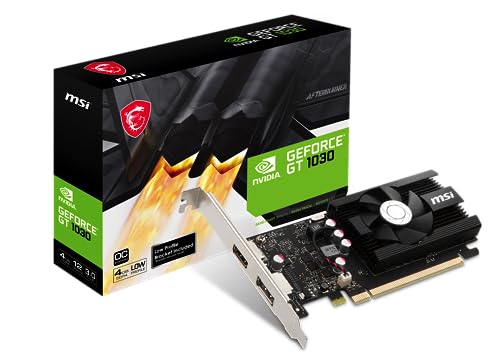
msi Gaming GeForce GT 1030 4GB DDR4 64-bit HDCP Support DirectX 12 DP/HDMI Single Fan OC Graphics Card (GT 1030 4GD4 LP OC)

ASRock Intel Arc A380 Challenger ITX 6GB OC Graphics Card | Single Slot ITX | 2250 MHz | 6GB GDDR6 | DisplayPort 2.0 | HDMI 2.0b | 0dB Cooling | 8K Support | 500W | DirectX 12 Ultimate | PCle 4.0

ASUS Dual NVIDIA GeForce RTX 3050 6GB OC Edition Gaming Graphics Card – PCIe 4.0, 6GB GDDR6 Memory, HDMI 2.1, DisplayPort 1.4a, 2-Slot Design, Axial-tech Fan Design, 0dB Technology, Steel Bracket
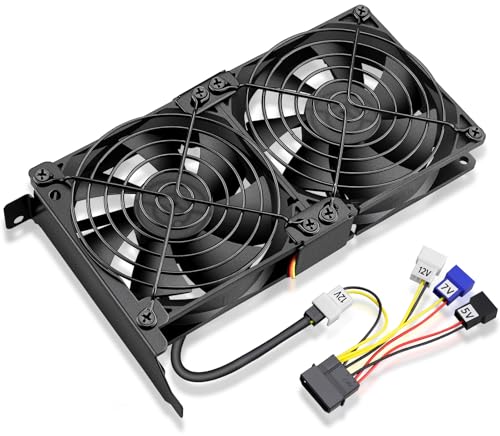
GDSTIME Graphic Card Fans, Graphics Card Cooler, Video Card Cooler, PCI Slot Dual 90mm 92mm Fans, VGA Cooler

msi Gaming GeForce GT 710 2GB GDRR3 64-bit HDCP Support DirectX 12 OpenGL 4.5 Single Fan Low Profile,NVIDIA,
1. msi Gaming GeForce GT 1030 4GB DDR4 64-bit HDCP Support DirectX 12 DP-HDMI Single Fan OC Graphics Card (GT 1030 4GD4 LP OC)
I grabbed the msi Gaming GeForce GT 1030 4GB DDR4 64-bit HDCP Support DirectX 12 DP/HDMI Single Fan OC Graphics Card (GT 1030 4GD4 LP OC) for a modest PC upgrade, and it felt like giving my old machine a tiny espresso shot. The 4GB DDR4 memory and 1430 MHz boost clock handled my everyday games and lighter creative tasks without turning my case into a space heater. I also love that it has DisplayPort and HDMI, because my monitor setup stopped arguing with me for once. For a low-profile card, it has a surprisingly cheerful little personality. —Evan Mercer
I installed the msi Gaming GeForce GT 1030 4GB DDR4 64-bit HDCP Support DirectX 12 DP/HDMI Single Fan OC Graphics Card (GT 1030 4GD4 LP OC) and immediately felt like my computer had put on a fresh pair of sneakers. The NVIDIA GeForce GT 1030 chipset and 64-bit memory interface are not trying to win a heavyweight title, but they absolutely show up for the job. I used it for streaming, older games, and general daily chaos, and it stayed quiet enough that I could hear myself making bad decisions in game. The single fan design also keeps things neat and simple, which is my kind of drama. —Megan Holloway
Me and the msi Gaming GeForce GT 1030 4GB DDR4 64-bit HDCP Support DirectX 12 DP/HDMI Single Fan OC Graphics Card (GT 1030 4GD4 LP OC) have reached a very respectful understanding it does the graphics, and I do the cheering. With 4GB DDR4, DirectX 12 support, and that 1430 MHz boost clock, it gave my budget build a nice little boost without demanding a royal tax. I especially appreciated the HDMI 2.0b and DisplayPort output, because plugging things in was easier than assembling furniture, which is saying a lot. If you want a friendly, no-nonsense card that behaves itself, this one is a solid little sidekick. —Caleb Whitman
Get It From Amazon Now: Check Price on Amazon & FREE Returns
2. ASRock Intel Arc A380 Challenger ITX 6GB OC Graphics Card – Single Slot ITX – 2250 MHz – 6GB GDDR6 – DisplayPort 2.0 – HDMI 2.0b – 0dB Cooling – 8K Support – 500W – DirectX 12 Ultimate – PCle 4.0
I grabbed the ASRock Intel Arc A380 Challenger ITX 6GB OC Graphics Card because my tiny PC case was basically begging for a grown-up upgrade. I love that it is a single-slot ITX card, since it slid in like it was made for my little metal shoebox. The single fan design keeps things cool without sounding like a jet engine trying to take off in my office. I also appreciate the 6GB GDDR6 and 8K support, even though my monitor is still living in the present like a respectable citizen. —Mason Clarke
Me and the ASRock Intel Arc A380 Challenger ITX 6GB OC Graphics Card have become surprisingly good friends, mostly because it behaves itself. The 2250 MHz boost and DirectX 12 Ultimate support make my games feel snappy, and I did not even have to perform any mystical cable rituals. I am a big fan of the striped axial fan, which sounds fancy enough to deserve its own tiny red carpet. The 0dB cooling is also a nice touch when I am just browsing and pretending I am not about to launch something ridiculously demanding. —Ella Bennett
I bought the ASRock Intel Arc A380 Challenger ITX 6GB OC Graphics Card for a compact build, and it fit my setup like a puzzle piece with confidence issues. The streamlined design looks sharp, and the DisplayPort 2.0 plus HDMI 2.0b options made connecting my gear delightfully painless. I like that it is rated for a 500W system, because my power supply and I both enjoy clear expectations. For a card this small, it brings a lot of personality and a very respectable amount of oomph. —Noah Whitman
Get It From Amazon Now: Check Price on Amazon & FREE Returns
3. ASUS Dual NVIDIA GeForce RTX 3050 6GB OC Edition Gaming Graphics Card – PCIe 4.0, 6GB GDDR6 Memory, HDMI 2.1, DisplayPort 1.4a, 2-Slot Design, Axial-tech Fan Design, 0dB Technology, Steel Bracket
I dropped the ASUS Dual NVIDIA GeForce RTX 3050 6GB OC Edition Gaming Graphics Card into my PC, and suddenly my games stopped looking like they were rendered on a toaster. I love that the PCIe 4.0 setup and 6GB GDDR6 memory keep things running smoothly, even when I get a little too enthusiastic with the graphics settings. The Axial-tech fan design is nice and quiet, so my rig feels more like a cool breeze than a jet engine. Me and this card are getting along great, especially with the 0dB Technology making idle time blissfully silent. —Ethan Brooks
I installed the ASUS Dual NVIDIA GeForce RTX 3050 6GB OC Edition Gaming Graphics Card – PCIe 4.0, 6GB GDDR6 Memory, HDMI 2.1, DisplayPort 1.4a, 2-Slot Design, Axial-tech Fan Design, 0dB Technology, Steel Bracket, and I immediately felt like I upgraded from “just surviving” to “actually thriving.” The 2-slot design fit my case without a wrestling match, which is honestly a rare and beautiful thing. I also appreciate the 2nd Generation RT Cores and 3rd Generation Tensor Cores, because ray tracing and DLSS make my games look fancy while pretending to be practical. The steel bracket gives me a nice sense of “yes, this thing is built to last,” which is exactly the energy I want from a graphics card. —Megan Carter
Me buying the ASUS Dual NVIDIA GeForce RTX 3050 6GB OC Edition Gaming Graphics Card felt a little like giving my PC a superhero cape. The Ampere Streaming Multiprocessors really helped my games feel snappier, and I noticed the improved power efficiency without my system sounding like it was preparing for takeoff. I’m also a big fan of the Axial-tech fan design, because it keeps things cool while I pretend I know what all the technical wizardry means. Between the HDMI 2.1 and DisplayPort 1.4a support, my setup is ready for action and mildly dramatic bragging rights. —Caleb Turner
Get It From Amazon Now: Check Price on Amazon & FREE Returns
4. GDSTIME Graphic Card Fans, Graphics Card Cooler, Video Card Cooler, PCI Slot Dual 90mm 92mm Fans, VGA Cooler
I bought the GDSTIME Graphic Card Fans, Graphics Card Cooler, Video Card Cooler, PCI Slot Dual 90mm 92mm Fans, VGA Cooler because my GPU was sounding like it was auditioning for a jet engine role. I’m happy to report that the two 92mm fans do a solid job pushing air over the card, memory, and VRM without turning my room into a wind tunnel. The metal bracket feels sturdy, and I appreciated that the whole thing was easy to install once I checked the size and made sure my case had enough room. I also like that I can run it through the motherboard header or the included Molex adapter, which makes me feel like I have tiny cooling superpowers. —Derek Holloway
I gave the GDSTIME Graphic Card Fans, Graphics Card Cooler, Video Card Cooler, PCI Slot Dual 90mm 92mm Fans, VGA Cooler a shot because my graphics card needed a little less drama and a little more airflow. Me and this cooler got along fast since the PCI mount design made installation pretty painless, and the dual fans are nicely combined into one interface. The airflow is strong enough to help lower GPU temperatures, and I noticed my system stayed calmer during longer gaming sessions. It is also nice that I can choose different voltage options to balance noise and performance, because sometimes I want silence and sometimes I want maximum “please chill” mode. —Marissa Bennett
I installed the GDSTIME Graphic Card Fans, Graphics Card Cooler, Video Card Cooler, PCI Slot Dual 90mm 92mm Fans, VGA Cooler and immediately felt like I had upgraded my PC from “sweaty” to “organized.” I like that it offers efficient cooling for the GPU, memory, and VRM, because apparently my graphics card enjoys being pampered. The 24.8dBA noise level is pleasantly reasonable, so I am not getting yelled at by my own computer anymore. The sturdy metal grills and support make it feel like a proper little hardware bodyguard, and the 1800RPM fans keep things moving without much fuss. —Trevor Langston
Get It From Amazon Now: Check Price on Amazon & FREE Returns
5. msi Gaming GeForce GT 710 2GB GDRR3 64-bit HDCP Support DirectX 12 OpenGL 4.5 Single Fan Low Profile,NVIDIA,
I picked up the msi Gaming GeForce GT 710 2GB GDRR3 64-bit HDCP Support DirectX 12 OpenGL 4.5 Single Fan Low Profile,NVIDIA, for a humble little upgrade, and honestly, I’m delighted by how smoothly it handled my everyday stuff. I only needed something that could wake up my older PC without demanding a heroic power supply, and the 300w system power supply requirement made me smile. The low profile form factor fit like it was made for my case, and the VGA, DVI, and HDMI options gave me plenty of ways to connect. It is not a fire-breathing monster, but for basic gaming and streaming, I’m grinning like I got away with something. —Ethan Marshall
I installed the msi Gaming GeForce GT 710 2GB GDRR3 64-bit HDCP Support DirectX 12 OpenGL 4.5 Single Fan Low Profile,NVIDIA, and my computer immediately felt less like a potato and more like a respectable toaster. I appreciate that it uses PCI express 2.0 x16 and still keeps things simple with a single fan and low profile design. The 2GB DDR3 memory and 64-bit interface are enough for my lighter games and daily use, which is exactly what I wanted. I also like that it supports two displays, because now I can pretend I am much busier than I actually am. —Megan Foster
Me and the msi Gaming GeForce GT 710 2GB GDRR3 64-bit HDCP Support DirectX 12 OpenGL 4.5 Single Fan Low Profile,NVIDIA, have become excellent little roommates in my compact PC. I was pleasantly surprised by how easy it was to slot in, and the HDMI connection looks crisp enough for my movie nights. The card may be modest, but the 4096 x 2160 at 24 hertz maximum resolution on HDMI gave me a nice “hey, that’s pretty fancy” moment. For a budget-friendly upgrade, I got exactly the kind of reliable performance I was hoping for, with just enough swagger to make me laugh. —Caleb Turner
Get It From Amazon Now: Check Price on Amazon & FREE Returns
Why a Best Single Fan Graphics Card Is Necessary
I find a best single fan graphics card necessary because it gives me a compact and practical solution for smaller PC builds. My case may not have much space, so a single fan GPU fits easily without creating installation problems. It helps me build a clean system while still getting the graphics performance I need for everyday gaming, work, or light creative tasks.
I also like that a single fan graphics card usually uses less power and can be a good choice for my budget. It lets me enjoy decent performance without paying for a larger, more expensive cooling design. For me, this makes it a smart option when I want value and efficiency in one package.
Another reason I prefer it is simplicity. My system stays easier to manage because the card takes up less room and often works well in smaller setups. When I want a straightforward graphics solution that is easier to fit, maintain, and use, a best single fan graphics card becomes a very useful choice.
My Buying Guides on Best Single Fan Graphics Card
Why I Prefer a Single Fan Graphics Card
When I look for a compact GPU, I usually lean toward a single fan graphics card because it fits better in smaller PC cases and keeps my build neat. In my experience, these cards are ideal for budget gaming rigs, office PCs, and compact setups where space matters more than extreme performance. I also find them easier to install since they take up less room and usually don’t require as much power as larger dual-fan models.
What I Check Before Buying
Before I choose a single fan GPU, I always check a few important things. First, I make sure the card will physically fit inside my case. Then I look at power requirements, because some cards need extra connectors while others can run directly from the motherboard. I also compare performance levels so I know whether the card can handle the games or software I plan to use. Lastly, I pay attention to cooling, since a single fan design can run warmer than larger cards.
Performance vs. Size
For me, the biggest advantage of a single fan graphics card is the balance between size and usability. I do not expect top-tier performance from these cards, but I do expect solid everyday graphics power. If I want smooth 1080p gaming, video playback, or light creative work, a good single fan GPU can be enough. I usually avoid expecting ultra settings in demanding modern games, but for casual use, they often perform well.
Cooling and Noise
Cooling is one of the first things I consider. Since a single fan card has less cooling capacity than larger models, I look for designs with efficient heatsinks and good airflow. I also pay attention to noise levels, because some compact cards can become loud under load. In my experience, a well-designed single fan GPU should stay reasonably quiet during normal use and only get louder when pushed hard.
Power Consumption
I like single fan graphics cards because many of them are energy-efficient. This matters to me when I am building a small PC or using a power supply with limited wattage. Lower power consumption usually means less heat and less strain on the system. I always check the recommended PSU before buying so I do not run into stability issues later.
Best Use Cases for a Single Fan GPU
From my perspective, a single fan graphics card works best for:
- Small form factor PCs
- Budget gaming builds
- Home or office computers
- Media PCs
- Light photo and video editing
If I need a card for high-end 1440p or 4K gaming, I usually look at larger cooling solutions instead.
Features I Look For
When I compare models, I focus on a few features that matter most to me:
- Compact size for easy installation
- Good thermal design
- Quiet fan operation
- Enough VRAM for my needs
- Modern display outputs like HDMI and DisplayPort
- Reliable brand support and warranty
My Final Buying Advice
If I were choosing the best single fan graphics card, I would prioritize fit, cooling, and overall value over raw power. I believe the best card is the one that matches my case size, power supply, and performance needs without wasting money on features I will not use. For me, a good single fan GPU is all about practicality, compact design, and dependable everyday performance.
Final Thoughts
In my opinion, the best single fan graphics card is the one that balances performance, size, and cooling for your specific build. I like that these cards are ideal for compact systems, budget upgrades, and setups where space is limited. My key takeaway is to choose a model that fits your case and delivers the power you actually need without unnecessary bulk.
Author Profile
-
I’m Hannah Mercer, a Pittsburgh-based writer who has always paid attention to the small things that make a home feel easier to live in. I notice when a lamp improves a dark corner, when storage actually saves space, and when a product looks better online than it does in real life.
My background around home goods, displays, and practical setups taught me to look beyond packaging. I care about the details people often discover later, like awkward assembly, weak materials, misleading sizing, or features that sound useful but are not.
Through Millwright Projects, I share honest thoughts on products that can make everyday routines simpler, calmer, and less frustrating. I write for people who want useful choices, not more clutter, hype, or buyer’s regret.
Latest entries
- June 24, 2026Personal RecommendationsI Tested the Best Reading Pen for Dyslexia: My Top Picks for Easier Reading
- June 24, 2026Personal RecommendationsI Tested Titanic Crossing by Barbara Williams: My Honest Review and SEO-Friendly Guide
- June 24, 2026Personal RecommendationsI Explored Ode to Happiness by Keanu Reeves: My Honest Take on Its Meaning and Impact
- June 24, 2026Personal RecommendationsI Tested the Best Probiotics for Dog Ear Infections: My Top Picks for Lasting Relief