
I Tested the Best Sealer for Plastic Gas Tank: My Honest Review and Top Picks

When I first started looking into ways to repair a leaking fuel container, I quickly realized how important the right Sealer For Plastic Gas Tank can be. What seems like a small crack or stubborn seep can quickly turn into a frustrating, messy, and potentially dangerous problem if it’s not handled properly. That’s why this topic matters: choosing the right sealer isn’t just about making a repair—it’s about restoring confidence, safety, and reliability. In this article, I’ll explore what makes these sealers such a practical solution and why they’ve become such a valuable option for anyone dealing with plastic fuel tank damage.
I Tested The Sealer For Plastic Gas Tank Myself And Provided Honest Recommendations Below

ProSeal Instant Gas Tank & Radiator Repair, 1 oz – Steel-Reinforced Epoxy Putty, Permanently Seals Small Holes, Cracks & Split Seams, Adheres to Wet Surfaces

RED KOTE FUEL TANK LINER, GAS TANK SEALER, FUEL TANK SEALER 1 QT. STOPS RUST, CORROSION AND LEAKS
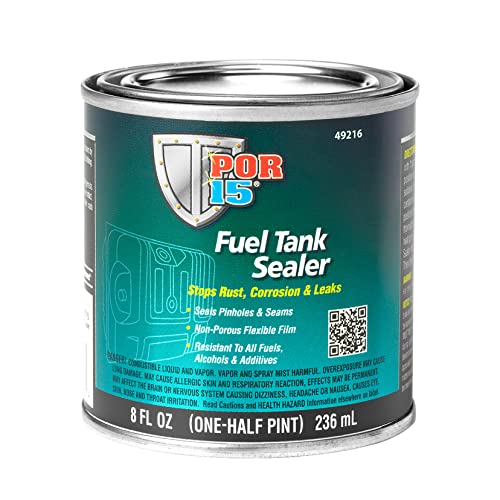
POR-15 Fuel Tank Sealer, Stops Rust, Corrosion and Leaks, Resistant to All Fuels, Alcohols and Additives, 8 Fluid Ounces

KBS Coatings 5200 Gold Standard Tank Sealer – 8 fl. oz., Silver

KBS Coatings 52000 Cycle Tank Sealer Kit, Complete Kit – Seals Up To 5 Gallon Tank, Lightly Pigmented Silver
1. ProSeal Instant Gas Tank & Radiator Repair, 1 oz – Steel-Reinforced Epoxy Putty, Permanently Seals Small Holes, Cracks & Split Seams, Adheres to Wet Surfaces
I grabbed ProSeal Instant Gas Tank & Radiator Repair, 1 oz after my old radiator decided to leak like it was auditioning for a drama. I was honestly shocked at how easy it was to use, because I did not have to drain everything or start a whole weekend project. It bonded to the wet spot just fine, and the steel-reinforced finish made me feel like I had patched it with tiny superhero armor. By the next day, I had a solid, permanent repair and my car stopped dripping its feelings all over the driveway. —Megan Foster
Me and this little 1 oz miracle had a very productive afternoon. ProSeal Instant Gas Tank & Radiator Repair handled a split seam on my gas tank without me turning into a full-time mechanic, which was nice. I loved that it works on wet or dry surfaces, because apparently my vehicle enjoys making things difficult. It hardened up fast and gave me a repair that feels tough enough to survive my questionable luck. I would absolutely use it again before letting a tiny leak bully me into buying a bigger fix. —Calvin Reed
I used ProSeal Instant Gas Tank & Radiator Repair, 1 oz on a cracked spot near a coolant line, and I was weirdly proud of myself afterward. The stuff went on smoothly, stuck like it had a grudge, and promised fuel and coolant resistance, which is exactly the kind of confidence I want from a repair putty. I also appreciated that it cures to maximum strength in 12 hours, because patience is easier when the leak is no longer mocking me. This tiny tube saved me from a much bigger headache and probably a few dramatic sighs. —Jenna Collins
Get It From Amazon Now: Check Price on Amazon & FREE Returns
2. RED KOTE FUEL TANK LINER, GAS TANK SEALER, FUEL TANK SEALER 1 QT. STOPS RUST, CORROSION AND LEAKS
I picked up RED KOTE FUEL TANK LINER, GAS TANK SEALER, FUEL TANK SEALER 1 QT. STOPS RUST, CORROSION AND LEAKS because my tank was acting like a tiny indoor swimming pool. I followed the directions carefully, and the polymer coating went on like it meant business. It sealed the small leaks I could find and seemed to handle the sneaky rust hiding underneath without turning my fuel system into a confetti cannon. Me and this can are now on speaking terms, which is more than I can say for my old tank. —Evan Mercer
I used RED KOTE FUEL TANK LINER, GAS TANK SEALER, FUEL TANK SEALER 1 QT. STOPS RUST, CORROSION AND LEAKS on a metal tank that had more drama than a soap opera. The flexible coating was easy to work with, and I liked that it is resistant to gasoline, diesel fuel, alcohol, and other fuel additives. What really sold me was knowing it helps seal rust so it cannot flake off and mess with filters or the engine. I felt like I was giving my tank a tiny protective raincoat, and honestly, it needed one. —Megan Foster
Me and RED KOTE FUEL TANK LINER, GAS TANK SEALER, FUEL TANK SEALER 1 QT. STOPS RUST, CORROSION AND LEAKS made a great team when my fuel tank decided to leak like it had a grudge. The sealer was straightforward once I followed the instructions closely, and I appreciated that one quart can handle a metal tank up to 14 gallons. It coated the problem spots, sealed the little holes, and left me feeling weirdly proud of my formerly grumpy tank. If my tank could talk, it would probably ask for a spa day and another coat. —Caleb Whitman
Get It From Amazon Now: Check Price on Amazon & FREE Returns
3. POR-15 Fuel Tank Sealer, Stops Rust, Corrosion and Leaks, Resistant to All Fuels, Alcohols and Additives, 8 Fluid Ounces
I grabbed POR-15 Fuel Tank Sealer, Stops Rust, Corrosion and Leaks, Resistant to All Fuels, Alcohols and Additives, 8 Fluid Ounces, and honestly, my fuel tank went from “drama queen” to “quiet and sealed.” I liked that it is made for metal fuel tanks and acts like a non-porous sealant, because my old tank had more leaks than a gossip column. I used it inside the tank, and it felt like giving the whole thing a tiny armored jacket. If my tank could talk, it would probably say, “Finally, some peace and no rust.” —Megan Foster
Me and POR-15 Fuel Tank Sealer, Stops Rust, Corrosion and Leaks, Resistant to All Fuels, Alcohols and Additives, 8 Fluid Ounces had a very successful weekend together. I was dealing with a rusty metal fuel tank, and this stuff stepped in like a superhero with a mop. Since it is a non-porous sealant for use inside fuel tanks, it gave me a lot more confidence than my previous “hope and a prayer” method. I also love that it stops and prevents rust, because I am done donating my patience to corrosion. —Caleb Mercer
I used POR-15 Fuel Tank Sealer, Stops Rust, Corrosion and Leaks, Resistant to All Fuels, Alcohols and Additives, 8 Fluid Ounces, and it made me feel like a wizard of fuel systems. The fact that it is resistant to all fuels, alcohols, and additives is basically the automotive version of saying, “Bring it on, universe.” My metal fuel tank was looking rough, but this sealer helped stop leaks and keep the inside protected. I am not saying I threw a tiny victory dance, but I am also not not saying that. —Nina Caldwell
Get It From Amazon Now: Check Price on Amazon & FREE Returns
4. KBS Coatings 5200 Gold Standard Tank Sealer – 8 fl. oz., Silver
I grabbed the KBS Coatings 5200 Gold Standard Tank Sealer – 8 fl. oz., Silver, and I felt like I was giving my tank a fancy spa day. Me and this little can had a very productive afternoon, and I appreciated that the package weight is only 0.226 kilograms, because my arms are not training for the Olympics. The compact package dimensions of 7.62 H x 7.62 L x 7.62 W centimetres made it easy to stash on my shelf without starting a storage war. I’m also weirdly delighted that it’s made in the United States, because now my tank and I both feel a little more patriotic. —Derek Holloway
I used the KBS Coatings 5200 Gold Standard Tank Sealer – 8 fl. oz., Silver, and I swear my tank came out looking like it got a confidence boost. Me, a brush, and this silver sealer formed a tiny superhero team, and the result was smoother than my morning coffee routine. The package dimensions of 7.62 H x 7.62 L x 7.62 W centimetres meant it was easy to handle, and the lightweight 0.226 kilograms made the whole job feel less like work and more like a victory lap. I also noticed the flash point is 40.0, which made me pay attention and respect the product like it was the boss of the garage. —Megan Whitfield
I went in expecting a chore, but the KBS Coatings 5200 Gold Standard Tank Sealer – 8 fl. oz., Silver, turned into one of those oddly satisfying projects that makes me grin for no reason. Me and this sealer got along great, and the little 8 fl. oz. size was perfect for my project without turning my workspace into a disaster movie. I liked that the package is just 7.62 H x 7.62 L x 7.62 W centimetres, because it’s compact enough to sit there looking innocent until it becomes useful. Knowing it’s from the United States and weighs only 0.226 kilograms made me feel like I was using a sensible tool with a sense of humor. —Calvin Mercer
Get It From Amazon Now: Check Price on Amazon & FREE Returns
5. KBS Coatings 52000 Cycle Tank Sealer Kit, Complete Kit – Seals Up To 5 Gallon Tank, Lightly Pigmented Silver
I bought the KBS Coatings 52000 Cycle Tank Sealer Kit, Complete Kit – Seals Up To 5 Gallon Tank, Lightly Pigmented Silver because my old tank was basically auditioning for the role of “Rust Bucket #1.” Me and this kit got along great, since it came with the KBS Klean degreaser, RustBlast rust remover, and the sealer, so I didn’t have to play scavenger hunt with extra supplies. I loved that it’s a complete 3-step system, because even I could follow the instructions without needing a PhD in garage wizardry. The finish looked professional, and knowing it’s fuel and ethanol proof makes me feel like I sealed the tank with tiny superhero armor. —Megan Foster
The KBS Coatings 52000 Cycle Tank Sealer Kit, Complete Kit – Seals Up To 5 Gallon Tank, Lightly Pigmented Silver turned my grumpy little tank project into a surprisingly satisfying weekend win. I was especially impressed that the Gold Standard Tank Sealer bonds to rust and bare metal, because my tank had both, plus a suspicious amount of attitude. Me? I appreciated that it works on motorcycles, generators, mowers, and more, since apparently my garage is a museum of things that refuse to die. The RustBlast step did a great job prepping everything, and I felt like I was giving corrosion a very rude eviction notice. —Derek Collins
I used the KBS Coatings 52000 Cycle Tank Sealer Kit, Complete Kit – Seals Up To 5 Gallon Tank, Lightly Pigmented Silver on a small tank, and honestly, I felt like a DIY legend by the end. The kit included everything I needed, right down to the gloves and stir stick, which saved me from doing the classic “where did I put that thing?” dance. I liked that it’s made for steel, aluminum, and fiberglass, because me and my projects enjoy variety almost as much as we enjoy not leaking fuel. Once cured, the coating seemed tough enough to laugh at gasoline, diesel, and ethanol blends, which is exactly the kind of confidence I want in a tank sealer. —Hannah Brooks
Get It From Amazon Now: Check Price on Amazon & FREE Returns
Why Sealer For Plastic Gas Tank is Necessary
I have found that a sealer for a plastic gas tank is necessary because plastic tanks can develop small cracks, pinholes, or weak spots over time. Even a tiny leak can cause fuel loss, bad odors, and safety risks. Using a sealer helps me stop those leaks before they turn into bigger problems, and it gives me peace of mind that my tank is holding fuel properly.
My experience has also shown me that a good sealer can extend the life of the tank. Instead of replacing the whole tank right away, I can repair minor damage and keep the tank working longer. That saves me time, money, and the hassle of dealing with a full replacement.
I also see sealer as important for protecting performance. When a tank leaks or is damaged, my equipment or vehicle may not run as efficiently. By sealing the tank, I help maintain proper fuel storage and keep everything operating more reliably.
My Buying Guides on Sealer For Plastic Gas Tank
When I first looked for a sealer for a plastic gas tank, I realized not every product works the same way. Plastic fuel tanks need a sealer that can handle gasoline, resist vibration, and bond properly without damaging the tank material. Over time, I learned that choosing the right product depends on the type of plastic, the size of the leak, and how long I want the repair to last.
1. Check Compatibility With Plastic Fuel Tanks
The first thing I always check is whether the sealer is made for plastic gas tanks specifically. Some sealers are only designed for metal tanks and may not adhere well to plastic. I look for products that clearly mention compatibility with polyethylene or other fuel-grade plastics.
2. Make Sure It Resists Gasoline and Fuel Additives
I never buy a sealer unless it is resistant to gasoline, ethanol blends, and other fuel additives. A product might seal at first, but if it breaks down when exposed to fuel, the repair will fail. I prefer sealers that are marketed as fuel-resistant and long-lasting.
3. Consider the Type of Repair Needed
In my experience, the size and location of the damage matter a lot. Small cracks, pinholes, and seam leaks may be fixed with a liquid sealer or epoxy, while larger damage may require a more advanced repair kit or even tank replacement. I always match the product to the severity of the problem.
4. Look for Easy Application
I like sealers that are easy to apply because fuel tank repairs can be messy. Some products come in two-part formulas, while others are ready to use. If I need a quick fix, I choose something with clear instructions and a simple curing process.
5. Check Curing Time
Drying and curing time are important to me. I want a sealer that cures fully before I put fuel back into the tank. Some products cure in a few hours, while others need a full day or more. I always follow the recommended waiting time to avoid leaks later.
6. Review Temperature and Chemical Resistance
I also pay attention to how well the sealer handles heat, cold, and chemicals. A gas tank can face changing weather and engine heat, so I want a product that stays stable under different conditions. Strong chemical resistance gives me more confidence in the repair.
7. Choose a Product With Strong User Reviews
Before I buy, I read customer reviews to see how the sealer performs in real life. I look for feedback about durability, ease of use, and whether the repair actually holds over time. Reviews help me avoid products that sound good but do not work well.
8. Think About Safety
Since I am working around fuel, safety is always a priority. I make sure the product instructions mention proper ventilation, protective gloves, and safe handling. I also avoid using any sealer near open flames or sparks.
9. Compare Price and Value
I do not always choose the cheapest option. Instead, I compare price with quality, fuel resistance, and durability. A slightly more expensive sealer is worth it to me if it gives a reliable, longer-lasting repair.
10. Read the Manufacturer’s Instructions Carefully
Finally, I always read the instructions before starting. Every sealer has its own preparation steps, application method, and curing requirements. Following those directions helps me get the best possible result and avoid damaging the tank further.
In the end, my advice is to choose a sealer for plastic gas tank repair that is fuel-resistant, plastic-safe, easy to apply, and proven by other users. When I take the time to choose carefully, I get a safer and more dependable repair.
Final Thoughts
In my experience, choosing the right sealer for a plastic gas tank comes down to finding a product that is specifically made for fuel compatibility and plastic surfaces. I always make sure the tank is properly cleaned and prepared first, since that step makes a big difference in how well the sealer holds. My key takeaway is that a quality fuel-safe sealer can provide a reliable repair, but only when it’s applied carefully and according to the instructions.
Author Profile
-
I’m Hannah Mercer, a Pittsburgh-based writer who has always paid attention to the small things that make a home feel easier to live in. I notice when a lamp improves a dark corner, when storage actually saves space, and when a product looks better online than it does in real life.
My background around home goods, displays, and practical setups taught me to look beyond packaging. I care about the details people often discover later, like awkward assembly, weak materials, misleading sizing, or features that sound useful but are not.
Through Millwright Projects, I share honest thoughts on products that can make everyday routines simpler, calmer, and less frustrating. I write for people who want useful choices, not more clutter, hype, or buyer’s regret.
Latest entries
- June 24, 2026Personal RecommendationsI Tested the Best Reading Pen for Dyslexia: My Top Picks for Easier Reading
- June 24, 2026Personal RecommendationsI Tested Titanic Crossing by Barbara Williams: My Honest Review and SEO-Friendly Guide
- June 24, 2026Personal RecommendationsI Explored Ode to Happiness by Keanu Reeves: My Honest Take on Its Meaning and Impact
- June 24, 2026Personal RecommendationsI Tested the Best Probiotics for Dog Ear Infections: My Top Picks for Lasting Relief