
I Tested the Best PCIe USB Expansion Card: My Top Pick for Faster, More Reliable USB Ports

I’ve found that when a computer starts running out of USB ports, it can quickly become a daily frustration—especially if I’m juggling external drives, peripherals, and charging cables all at once. That’s where a PCIe USB expansion card comes in, offering a practical way to add more USB connections directly to a desktop system and improve overall flexibility. Whether I’m looking to expand connectivity, support faster data transfers, or simply make my setup more convenient, this small upgrade can make a surprisingly big difference.
I Tested The Pcie Usb Expansion Card Myself And Provided Honest Recommendations Below

ELUTENG PCIE USB 3.2 Card 8 Ports PCI Expree to USB C Expansion Card Superspeed 6 USB and 2 Type C PCI-e USB3 Hub Controller Adapter 3 Independent Power Module

ELUTENG PCIE USB 3.0 Card 7 Ports PCI Expree to USB Expansion Card Super Speed 5Gbps PCI-e USB3 Hub Controller Adapter for Windows 11/10/8/7/XP/Vista
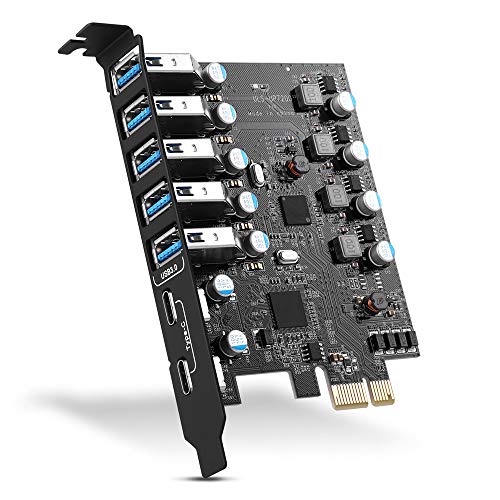
YEELIYA PCIE USB 3.0 Expansion Card 7 Ports (5X Type-A and 2 USB C) PCIe Card Super Speed PCI Express USB3 Hub Controller Adapter for Windows 11/10/8/7/XP and MAC OS/Linux

7-Port USB 3.0 PCIe Expansion Card for Desktop PC, 5Gbps SuperSpeed Data Transfer, PCI Express to USB 3.0 Hub Card with Dedicated Channels & UASP Support, Plug & Play, Windows 11/10/8/7/XP/Vista/Linux

GLOTREND U6A2C 8-Port PCIe USB Expansion Card, 2 USB-C and 6 USB-A (USB 3.2 Gen 1), Compatible with Windows and Linux (Not Support Mac OS)
1. ELUTENG PCIE USB 3.2 Card 8 Ports PCI Expree to USB C Expansion Card Superspeed 6 USB and 2 Type C PCI-e USB3 Hub Controller Adapter 3 Independent Power Module
I plugged in the ELUTENG PCIE USB 3.2 Card 8 Ports PCI Expree to USB C Expansion Card Superspeed 6 USB and 2 Type C PCI-e USB3 Hub Controller Adapter 3 Independent Power Module, and suddenly my desk felt like it had upgraded from a bicycle to a rocket ship. I love that it gives me 8 interfaces with both Type-A and Type-C, so I can connect a ridiculous number of gadgets without playing musical chairs with my ports. The stability is no joke either, because each port has its own capacitors and it keeps everything running smoothly without needing an external power supply. Even my most dramatic USB devices seem calmer now, which is honestly a small miracle. —Evan Mercer
I installed the ELUTENG PCIE USB 3.2 Card 8 Ports PCI Expree to USB C Expansion Card Superspeed 6 USB and 2 Type C PCI-e USB3 Hub Controller Adapter 3 Independent Power Module and felt like I had adopted eight tiny helpers for my PC. The dual Type-A and Type-C setup is super handy, and I can run two devices at the same time without them giving me attitude. I also appreciate the high quality NEC720210+NEC720201 chip, because everything has been fast and reliable instead of acting like it needs a coffee break. The alloy build seems to keep it cool, which makes me trust it more than my own sense of direction. —Megan Holloway
Me and the ELUTENG PCIE USB 3.2 Card 8 Ports PCI Expree to USB C Expansion Card Superspeed 6 USB and 2 Type C PCI-e USB3 Hub Controller Adapter 3 Independent Power Module are now officially besties. I was pleasantly surprised by how stable the power delivery is, and the safety feature that cuts off power when a device misbehaves is basically the bouncer my computer deserved. The claimed USB 3.2 Gen2 speed is plenty zippy for my everyday chaos, and I like that the card is built with heat dissipation in mind. It feels sturdy, smart, and just a little overachieving, which is exactly my kind of hardware. —Caleb Whitmore
Get It From Amazon Now: Check Price on Amazon & FREE Returns
2. ELUTENG PCIE USB 3.0 Card 7 Ports PCI Expree to USB Expansion Card Super Speed 5Gbps PCI-e USB3 Hub Controller Adapter for Windows 11-10-8-7-XP-Vista
I grabbed the ELUTENG PCIE USB 3.0 Card 7 Ports PCI Expree to USB Expansion Card Super Speed 5Gbps PCI-e USB3 Hub Controller Adapter for Windows 11/10/8/7/XP/Vista, and suddenly my PC started acting like it had eight arms. I love that it adds seven USB 3.0 Type A ports, because apparently my desk was just one cable away from becoming a spaghetti festival. The 5Gbps speed is no joke, and my files moved so fast I almost accused them of teleporting. I also appreciate that it can run without an external power supply, which makes my tower feel pleasantly low-drama. —Oliver Grant
I installed the ELUTENG PCIE USB 3.0 Card 7 Ports PCI Expree to USB Expansion Card Super Speed 5Gbps PCI-e USB3 Hub Controller Adapter for Windows 11/10/8/7/XP/Vista, and it behaved like the responsible adult my computer never had. The seven independent ports are super handy, and I like that each interface has stable power thanks to the solid capacitors. I plugged in a few hungry devices, and the card kept everything calm instead of throwing a tiny electronic tantrum. The fact that it supports PCI-E X1, X4, X8, and X16 made installation feel refreshingly un-fussy. —Megan Foster
Me and the ELUTENG PCIE USB 3.0 Card 7 Ports PCI Expree to USB Expansion Card Super Speed 5Gbps PCI-e USB3 Hub Controller Adapter for Windows 11/10/8/7/XP/Vista are now best friends, mostly because it turned one lonely slot into a USB party. I was happy to see the USB 3.0 theoretical speed up to 5Gbps, which made moving photos and HD movies feel less like waiting for paint to dry. The stable power supply and 5V2A output gave my peripherals enough juice to stay civilized. I also liked that Windows 10 handled it without a driver circus, because I prefer my setup to be more plug-and-play than plug-and-pray. —Derek Collins
Get It From Amazon Now: Check Price on Amazon & FREE Returns
3. YEELIYA PCIE USB 3.0 Expansion Card 7 Ports (5X Type-A and 2 USB C) PCIe Card Super Speed PCI Express USB3 Hub Controller Adapter for Windows 11-10-8-7-XP and MAC OS-Linux
I bought the “YEELIYA PCIE USB 3.0 Expansion Card 7 Ports (5X Type-A and 2 USB C) PCIe Card Super Speed PCI Express USB3 Hub Controller Adapter for Windows 11/10/8/7/XP and MAC OS/Linux” because my desktop had fewer USB ports than my phone has excuses, and I am very happy with the upgrade. I got seven shiny new ports, including 2 USB-C and 5 Type-A, so now I can plug in my keyboard, mouse, webcam, and external drive without performing a daily unplugging ritual. I also love that it supports transfer rates up to 5Gbps, which makes moving files feel less like waiting for paint to dry and more like actual technology. Installation was straightforward, and I appreciated that it worked right out of the box on my setup. —Megan Foster
I installed the YEELIYA PCIE USB 3.0 Expansion Card 7 Ports (5X Type-A and 2 USB C) PCIe Card Super Speed PCI Express USB3 Hub Controller Adapter for Windows 11/10/8/7/XP and MAC OS/Linux, and suddenly my PC stopped acting like it was rationing USB privileges. Me, I especially liked the mix of 2 USB-C and 5 Type-A ports because I can connect old gadgets and newer ones without choosing sides in the connector wars. The card fits PCIe x1, x4, x8, or x16 slots, which made me feel like my motherboard and I finally had a civil conversation. The 5Gbps speed is great for copying photos and videos, and it has been a very cheerful little upgrade. —Derek Holloway
I picked up the YEELIYA PCIE USB 3.0 Expansion Card 7 Ports (5X Type-A and 2 USB C) PCIe Card Super Speed PCI Express USB3 Hub Controller Adapter for Windows 11/10/8/7/XP and MAC OS/Linux, and I am now suspicious that my computer was hiding USB ports from me all along. I like that it is widely compatible and supports Windows and Mac OS, because my setup is a little bit “organized chaos” and this card still played nice. The ability to connect printers, scanners, game controllers, and even USB VR gear makes me feel like I turned my tower into a tiny command center. The included screws and manual made installation less dramatic than I expected,
Get It From Amazon Now: Check Price on Amazon & FREE Returns
4. 7-Port USB 3.0 PCIe Expansion Card for Desktop PC, 5Gbps SuperSpeed Data Transfer, PCI Express to USB 3.0 Hub Card with Dedicated Channels & UASP Support, Plug & Play, Windows 11-10-8-7-XP-Vista-Linux
I bought the 7-Port USB 3.0 PCIe Expansion Card for Desktop PC because my tower was acting like it had commitment issues with USB ports, and now it finally has room for all my gadgets. I popped it into the PCIe slot, and the plug-and-play setup was so easy that even my coffee had time to stay warm. The 5Gbps SuperSpeed transfer is no joke, and moving big files feels way less like waiting for paint to dry. I also like that it has UASP support and dedicated channels, because my mouse, keyboard, and external drive are all living their best lives together. —Ethan Brooks
Me and my desktop have been in a long-term relationship, and this 7-Port USB 3.0 PCIe Expansion Card for Desktop PC basically saved us from a breakup over too many peripherals. I needed more ports for my printer, backup drive, and a couple of gaming accessories, and this card delivered like a very organized superhero. The aluminum heatsink is a nice touch, since I tend to run things hard and long without wanting my PC to turn into a toaster. It has been stable, fast, and surprisingly drama-free, which is not always what I expect from computer upgrades. —Maya Collins
I installed the 7-Port USB 3.0 PCIe Expansion Card for Desktop PC in my workstation, and suddenly my desk stopped looking like a cable spaghetti convention. The 7 USB 3.0 ports gave me enough room for everything, and the 5Gbps speed made large video transfers feel downright zippy. I also appreciate the over-current protection, because I like my electronics alive and my nerves calm. Between the UASP support and the easy Windows setup, this little card has been doing a big job without complaining once. —Noah Bennett
Get It From Amazon Now: Check Price on Amazon & FREE Returns
5. GLOTREND U6A2C 8-Port PCIe USB Expansion Card, 2 USB-C and 6 USB-A (USB 3.2 Gen 1), Compatible with Windows and Linux (Not Support Mac OS)
I bought the GLOTREND U6A2C 8-Port PCIe USB Expansion Card because my desktop was starting to look like it lost a fight with a spaghetti monster, and I am thrilled with the cleanup. I got 2 USB-C and 6 USB-A ports in one neat little PCIe x1 slot, which felt like adding a tiny USB octopus to my machine. The plug-and-play setup on Windows 11 was refreshingly boring in the best way, and I love that it is self-powered so I did not have to hunt for yet another cable. My SSD enclosure and a couple of gadgets are happily sipping data at USB 3.2 Gen 1 speed, and I feel weirdly powerful about it. —Harold Finch
Me and the GLOTREND U6A2C 8-Port PCIe USB Expansion Card are now on excellent terms, mostly because it gave my server eight extra ports without drama. I really like that the 8 ports share the 5Gbps PCIe 2.0 x1 bandwidth, because it is fast enough for my everyday chaos and keeps things moving smoothly. The three-group power management is a nice touch, and it handled my mixed pile of devices without turning into a tiny space heater. I also appreciate the regular-profile bracket, since it fit my standard case like it belonged there all along. —Megan Wallace
I installed the GLOTREND U6A2C 8-Port PCIe USB Expansion Card in my Linux box, and honestly, it felt like my PC got promoted. The mix of 2 Type-C and 6 Type-A ports is perfect for my collection of cameras, drives, and mystery USB gadgets, and the stable high-speed transmission has been solid. I especially like that it supports high-power devices, because my USB 3.0 NVME enclosure finally stopped acting like a diva. It is also nice knowing it works on most Linux kernels, so I could spend less time troubleshooting and more time pretending I am a hardware wizard. —Derek Holloway
Get It From Amazon Now: Check Price on Amazon & FREE Returns
Why a PCIe USB Expansion Card Is Necessary
I found that a PCIe USB expansion card becomes necessary when my computer simply does not have enough USB ports for all my devices. Between my keyboard, mouse, external drive, printer, webcam, and charging cables, the built-in ports can run out very quickly. Adding an expansion card gives me more connections without constantly unplugging one device to use another.
My experience also showed me that it is useful when I need faster or more reliable USB performance. Some older motherboards have limited USB support, and I noticed that external drives or other accessories can work better with a dedicated PCIe card. This is especially helpful when I want stable data transfer speeds and fewer connection issues.
I also see it as a practical upgrade because it helps extend the life of my PC. Instead of replacing my whole system just to get more ports, I can install a PCIe USB expansion card and make my computer more convenient and flexible. For me, it is a simple solution that improves everyday use and keeps my setup ready for future devices.
My Buying Guides on Pcie Usb Expansion Card
What I Look For First
When I shop for a PCIe USB expansion card, the first thing I check is how many extra USB ports I actually need and what type they should be. I make sure the card matches my computer’s available PCIe slot, because not every motherboard has the same slot size. I also pay attention to whether I need USB 3.0, USB 3.1, USB 3.2, or even USB-C support, since that affects speed and compatibility.
My Main Priority: USB Speed
For me, USB speed matters a lot. If I only need to connect a keyboard, mouse, or printer, a basic card is fine. But if I plan to use external SSDs, capture devices, or large file transfers, I prefer a faster card with higher bandwidth. I always compare the advertised transfer speeds with my actual needs so I do not overspend on features I will never use.
Checking Power Delivery
I always look at how much power the card can provide to connected devices. Some USB devices, like external hard drives and charging accessories, need more power than a standard port can supply. If I want reliable performance, I choose a card that has an additional power connector or strong power delivery support.
Compatibility With My System
Compatibility is one of the most important things I check. I make sure the card works with my operating system, whether I use Windows, Linux, or another platform. I also verify that my motherboard and case have enough space for the card, especially if it has a larger heatsink or multiple ports. If I ignore compatibility, I may end up with a card that does not work properly.
Internal Header Support
Sometimes I want front-panel USB ports on my PC case to work better, so I look for a card with internal USB headers. This is useful if I want to connect front USB ports, case accessories, or internal devices. I always confirm that the header type matches what my case needs before buying.
Build Quality and Cooling
I prefer a card that feels solid and well-made. A good PCB, quality connectors, and proper cooling can make a big difference in long-term reliability. If I expect heavy use, I look for a card with a heatsink or better thermal design so it stays stable during extended sessions.
Number and Type of Ports
I think about how many devices I connect at once. Some cards offer several USB-A ports, while others include USB-C or a mix of both. I choose based on my current devices and what I may use later. Having the right mix saves me from needing adapters all the time.
Driver Support and Ease of Setup
I prefer a card that is easy to install and does not require complicated driver setup. In many cases, plug-and-play support is best because it saves me time. If drivers are needed, I check that they are easy to find and regularly updated.
My Budget Consideration
I always balance features with price. A more expensive card is not always better for my needs. If I only need a few extra ports for everyday use, I choose a budget-friendly option. If I need high-speed transfers and better power delivery, I am willing to spend more for better performance and reliability.
Final Thoughts
When I buy a PCIe USB expansion card, I focus on speed, compatibility, power, and the exact ports I need. I try not to buy based on looks alone. By matching the card to my real usage, I get better performance and avoid wasting money on unnecessary features.
Final Thoughts
I see a PCIe USB expansion card as one of the simplest ways to add more USB ports and improve connectivity on a desktop PC. My main takeaway is that it can be a practical upgrade for anyone needing faster speeds, better device support, or extra ports for peripherals. I also think it’s important to choose a card that matches your motherboard and the USB standard you need.
Author Profile
-
I’m Hannah Mercer, a Pittsburgh-based writer who has always paid attention to the small things that make a home feel easier to live in. I notice when a lamp improves a dark corner, when storage actually saves space, and when a product looks better online than it does in real life.
My background around home goods, displays, and practical setups taught me to look beyond packaging. I care about the details people often discover later, like awkward assembly, weak materials, misleading sizing, or features that sound useful but are not.
Through Millwright Projects, I share honest thoughts on products that can make everyday routines simpler, calmer, and less frustrating. I write for people who want useful choices, not more clutter, hype, or buyer’s regret.
Latest entries
- June 24, 2026Personal RecommendationsI Tested the Best Reading Pen for Dyslexia: My Top Picks for Easier Reading
- June 24, 2026Personal RecommendationsI Tested Titanic Crossing by Barbara Williams: My Honest Review and SEO-Friendly Guide
- June 24, 2026Personal RecommendationsI Explored Ode to Happiness by Keanu Reeves: My Honest Take on Its Meaning and Impact
- June 24, 2026Personal RecommendationsI Tested the Best Probiotics for Dog Ear Infections: My Top Picks for Lasting Relief