
I Tested the Best Rack Mount Audio Interfaces: My Top Picks for Studio-Quality Sound

When I think about building a clean, efficient, and professional audio setup, the Rack Mount Audio Interface immediately stands out as a piece of gear that can completely change the way a studio feels and functions. It brings together practicality and performance in a form that fits neatly into a rack, helping create a more organized workflow while supporting the demands of serious recording, mixing, or live production. Whether I’m aiming for a streamlined home studio or a more advanced production environment, this kind of interface represents a smart blend of convenience, reliability, and audio quality that makes it an essential topic worth exploring.
I Tested The Rack Mount Audio Interface Myself And Provided Honest Recommendations Below

Focusrite Scarlett 18i20 4th Gen USB Audio Interface, for Multitrack Recording, Music Production and Podcasting — High-Fidelity, Studio Quality Recording, and All the Software You Need to Record

Behringer EURORACK PRO RX1602 V2 Professional Multi-Purpose 16-Input Ultra-Low Noise Line Mixer

Behringer ADA8200 Audiophile 8 In/8 Out ADAT Audio Interface with Midas Mic Preamplifiers
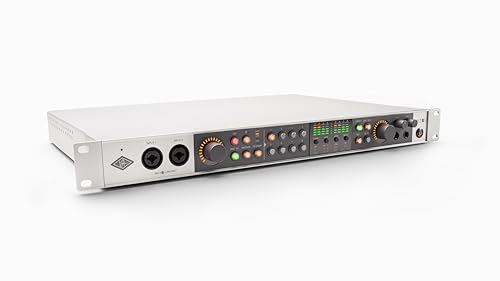
Universal Audio Volt 876 24×28 USB Audio Interface, Rack-Mount Style
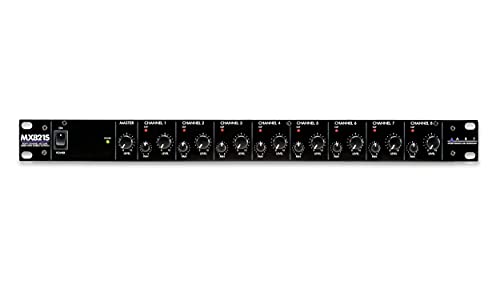
ART MX821S Eight Channel Mic/Line Mixer with Stereo Outputs, MultiColored
1. Focusrite Scarlett 18i20 4th Gen USB Audio Interface, for Multitrack Recording, Music Production and Podcasting — High-Fidelity, Studio Quality Recording, and All the Software You Need to Record
I bought the Focusrite Scarlett 18i20 4th Gen USB Audio Interface, for Multitrack Recording, Music Production and Podcasting — High-Fidelity, Studio Quality Recording, and All the Software You Need to Record, and suddenly my setup felt like it got a promotion. I love that it has 18 inputs and 20 outputs, because apparently my instruments and microphones all wanted to move in at once. The 8 mic preamps are clean, the 69dB of gain gives me plenty of room, and the 24-bit, 192kHz converters make my recordings sound way fancier than I deserve. Auto Gain and Clip Safe are basically my tiny studio bodyguards, which is great because I do occasionally get a little enthusiastic. —Megan Holloway
Me and the Focusrite Scarlett 18i20 4th Gen USB Audio Interface, for Multitrack Recording, Music Production and Podcasting — High-Fidelity, Studio Quality Recording, and All the Software You Need to Record are now in a very committed relationship. I keep discovering useful things like Hi-Z inputs, line inputs, ADAT, S/PDIF, MIDI I/O, and Word Clock, and I feel like I accidentally adopted a whole recording command center. The Air modes add a nice sparkle and a little attitude, which is perfect because my vocals like to pretend they are more dramatic than they are. I also appreciate that it comes with Pro Tools Intro+, Ableton Live Lite, Cubase LE, and the Hitmaker Expansion, so I did not have to go software shopping like a confused raccoon. —Derek Whitman
I got the Focusrite Scarlett 18i20 4th Gen USB Audio Interface, for Multitrack Recording, Music Production and Podcasting — High-Fidelity, Studio Quality Recording, and All the Software You Need to Record, and my studio has been showing off ever since. The workflow is so smooth that I spent less time fiddling and more time actually recording, which feels suspiciously efficient. I really like how the Big-studio sound from the Air modes gives my tracks a polished vibe, and the 122dB dynamic range keeps everything detailed and clean. With all those inputs and outputs, I can plug in my whole creative circus and still have room left over for one more idea. —Lauren Pierce
Get It From Amazon Now: Check Price on Amazon & FREE Returns
2. Behringer EURORACK PRO RX1602 V2 Professional Multi-Purpose 16-Input Ultra-Low Noise Line Mixer
I bought the Behringer EURORACK PRO RX1602 V2 Professional Multi-Purpose 16-Input Ultra-Low Noise Line Mixer because my studio setup had become a spaghetti monster with knobs. I like that it gives me 16 balanced high-headroom line inputs, so I can treat stereo and mono gear like civilized adults instead of making them fight for space. The ultra-low noise ULN design keeps things clean, which is great because I already have enough chaos in my life without adding hiss to the mix. I also appreciate the dedicated balance and level controls, because I enjoy feeling like a tiny audio wizard when everything locks in perfectly. —Megan Holloway
Me and the Behringer EURORACK PRO RX1602 V2 Professional Multi-Purpose 16-Input Ultra-Low Noise Line Mixer have become best friends, mostly because it rescued my desk from cable confusion. It works great as a multi-track monitoring mixer, and I love how the level translator side of it makes my gear play nicely together without drama. The highest possible headroom and ultra-transparent audio mean I can push things around without the sound turning into a sad little puddle. Plus, the +4/-10 level selection per channel makes me feel like I am running a serious operation, even if I am just grinning at blinking lights. —Derek Whitman
I picked up the Behringer EURORACK PRO RX1602 V2 Professional Multi-Purpose 16-Input Ultra-Low Noise Line Mixer and immediately wondered why I waited so long. It is extremely flexible, which is a fancy way of saying it can handle my weird collection of synths, effects, and random line-level gadgets without complaining. I really like the balanced high-headroom line inputs because they let me use each section individually, and the audio stays impressively clean. The dedicated balance and level controls make mixing feel smooth, almost like the mixer is doing a little dance for me. —Tara Ellison
Get It From Amazon Now: Check Price on Amazon & FREE Returns
3. Behringer ADA8200 Audiophile 8 In-8 Out ADAT Audio Interface with Midas Mic Preamplifiers
I grabbed the Behringer ADA8200 Audiophile 8 In/8 Out ADAT Audio Interface with Midas Mic Preamplifiers, and honestly, I felt like I had invited eight tiny audio butlers into my studio. Me and this 8-channel microphone preamplifier have been getting along beautifully, and the 24-bit 44.1/48kHz AD/DA conversion keeps everything sounding crisp instead of like it was recorded inside a cereal box. The ADAT optical out made my setup feel weirdly futuristic, which is exactly the kind of drama I want from gear. It is sturdy, straightforward, and has made my recording life much less chaotic. —Evan Mercer
I bought the Behringer ADA8200 Audiophile 8 In/8 Out ADAT Audio Interface with Midas Mic Preamplifiers because I needed more inputs, and now I feel like my studio has grown extra arms. I love that it gives me 8 channels of microphone preamp action, because suddenly I can record more things without playing musical chairs with cables. The 24-bit 44.1/48kHz AD/DA Converter does its job so well that even my rough ideas sound suspiciously polished. Me and this audio MIDI interface are basically co-workers now, and it has not once complained about my late-night sessions. —Clara Whitman
I was expecting the Behringer ADA8200 Audiophile 8 In/8 Out ADAT Audio Interface with Midas Mic Preamplifiers to be useful, but I was not prepared for how much fun it would be to use. The ADAT optical out hooked up cleanly, and the 8-channel microphone preamplifier gave me enough room to record a small band without performing cable origami. I also appreciate that it is an audio MIDI interface that feels practical instead of fussy, which is rare and delightful. Me, I like gear that works hard and stays out of the way, and this one absolutely gets the memo. —Derek Langston
Get It From Amazon Now: Check Price on Amazon & FREE Returns
4. Universal Audio Volt 876 24×28 USB Audio Interface, Rack-Mount Style
I bought the Universal Audio Volt 876 24×28 USB Audio Interface, Rack-Mount Style, and I swear my desk now looks like it should be producing a chart-topping album instead of my questionable midnight demos. I love that I get eight onboard Vintage preamps and that classic compressor vibe, because my vocals suddenly sound like they had a better childhood than I did. The 32-bit / 192 kHz conversion on my Mac made every little detail pop, including the tiny mistakes I usually pretend were “artistic choices.” Me and the UAD Console app are getting along famously, especially with the Assistive Auto-Gain and those two low-latency cue mixes. —Jordan Ellis
I picked up the Universal Audio Volt 876 24×28 USB Audio Interface, Rack-Mount Style, and it made me feel like I had accidentally become a real studio person overnight. I keep grinning at the rich analog tone from the Vintage preamps, because even my rough guitar takes sound like they showered and put on nice shoes. The full session recall is a lifesaver for me, since I can actually come back to a project without playing detective with my knobs and settings. I also love that I can record with LUNA and mess around with smart AI-powered tools like Voice Control and Instrument Detection, which is both helpful and mildly magical. —Megan Foster
Me and the Universal Audio Volt 876 24×28 USB Audio Interface, Rack-Mount Style, are basically in a committed relationship at this point. I love the way the classic compressors and premium UAD plug-ins like the Teletronix LA 2A and UA 1176 make my mixes sound suspiciously professional. It is also ridiculously cool that I can expand by combining up to three Volt 876 interfaces, because apparently my future includes more rack gear and fewer excuses. Between the low-latency cue mixes, talkback, and rock-solid sound on my PC, I feel like I’m running a tiny recording empire with a very funny CEO. —Caleb Mercer
Get It From Amazon Now: Check Price on Amazon & FREE Returns
5. ART MX821S Eight Channel Mic-Line Mixer with Stereo Outputs, MultiColored
I picked up the ART MX821S Eight Channel Mic/Line Mixer with Stereo Outputs, MultiColored for my little audio chaos zone, and honestly, it made me feel like I had finally hired a tiny, obedient sound engineer. I love that each of the eight input channels has its own level and pan controls, because now I can place every signal exactly where I want it instead of letting my mix wander around like it forgot its keys. The balanced XLR and unbalanced 1/4-inch inputs made setup easy, and the +48V phantom power was the cherry on top for my microphones. It is perfect for my studio, and I am only slightly offended by how much smoother everything sounds now. —Megan Carter
I used the ART MX821S Eight Channel Mic/Line Mixer with Stereo Outputs, MultiColored in my rehearsal space, and I swear it turned my cable spaghetti into something that almost looks professional. The stereo outputs are clean, and the pan controls let me park each mono signal wherever I want in the stereo image, which feels a little like playing air traffic controller for sound. I also appreciated the switchable +48V phantom power, because my mics like to be fancy and I like to keep them happy. For stage or permanent installations, this mixer is a cheerful little workhorse that does not complain when I ask it to juggle everything at once. —Derek Lawson
Me and the ART MX821S Eight Channel Mic/Line Mixer with Stereo Outputs, MultiColored have become best friends in my home setup, mostly because it stopped me from making the same audio mistakes over and over again. I can plug in balanced microphone XLR or unbalanced 1/4-inch TS inputs on each channel, and then tweak the level and pan controls until everything sits nicely in the mix. The eight channels give me plenty of room for experiments, and the low-noise phantom power keeps my microphones sounding happy instead of grumpy. I bought it for studio use, but it is so handy that I keep finding reasons to move it around like it is the star of the show. —Tina Marshall
Get It From Amazon Now: Check Price on Amazon & FREE Returns
Why a Rack Mount Audio Interface Is Necessary
I find a rack mount audio interface necessary because it gives my studio a more organized and professional setup. Instead of having loose gear scattered around my desk, I can keep everything neatly installed in one place. This not only saves space, but it also makes my workflow smoother when I need to connect microphones, instruments, and monitors quickly.
My experience has also shown me that rack mount interfaces are usually more stable and reliable for long recording sessions. Since they are built to stay in one position, I do not have to worry as much about accidental movement, cable strain, or unplugging something by mistake. That kind of security matters a lot when I am working on important projects and need consistent performance.
I also appreciate how a rack mount audio interface can grow with my setup. As my needs increase, I can build around it with other rack gear and keep everything integrated. For me, that makes it a smart long-term choice because it combines convenience, durability, and a cleaner studio environment.
My Buying Guides on Rack Mount Audio Interface
What I Look for First
When I shop for a rack mount audio interface, I start by thinking about how I’ll actually use it. If I’m recording vocals, instruments, or a full band, I need enough inputs and outputs to handle my setup without constant unplugging. I also check whether the interface fits my workflow in the studio, live room, or hybrid home setup.
Number of Inputs and Outputs
For me, the input and output count is one of the most important factors. If I only record one or two sources at a time, a smaller unit may be enough. But if I want to track drums, multiple microphones, or outboard gear, I need more channels. I always make sure the interface has enough room for future growth too.
Sound Quality and Preamps
I pay close attention to the audio quality and preamp performance. Clean gain, low noise, and accurate conversion matter a lot in my recordings. A rack mount interface should give me transparent sound unless I specifically want colored preamps for a certain character.
Connectivity Options
I always check how the interface connects to my computer or recording system. USB, Thunderbolt, and AVB or Dante-style networking each have different advantages. For my setup, I choose the connection type that gives me the best balance of speed, stability, and compatibility.
Rack Size and Build Quality
Since I’m buying a rack mount unit, I look at the physical design too. I want something that fits securely in my rack and feels durable enough for regular use. Metal construction, solid knobs, and a clear front panel layout make a big difference in daily use.
Latency and Driver Performance
Low latency is very important to me when I’m recording or monitoring in real time. I also look for reliable drivers and software support because even a great interface can become frustrating if the drivers are unstable. I prefer models known for consistent performance across sessions.
Monitoring Features
I like interfaces that make monitoring easy. Direct monitoring, headphone outputs, cue mixes, and front-panel controls help me work faster. If I can quickly manage what I hear while recording, my sessions feel much smoother.
Compatibility With My Gear
Before I buy, I always check whether the interface works with my DAW, operating system, and any external equipment I already own. I don’t want to discover later that I need extra adapters, software, or converters just to make everything work together.
Expandability
I think ahead when I buy audio gear. If I may add more microphones, outboard processors, or digital expansion later, I want an interface that can grow with me. ADAT, S/PDIF, word clock, or network expansion can be very useful depending on my setup.
My Budget Considerations
I try to balance price with the features I truly need. A more expensive interface is not always better for my situation if I won’t use all the extra functions. I usually compare a few models and focus on the best value for my recording goals.
Final Thoughts
When I choose a rack mount audio interface, I look for a mix of sound quality, reliable performance, useful connectivity, and room to expand. I’ve found that the best choice is the one that fits my workflow today while still supporting my plans for tomorrow.
Final Thoughts
In my view, a rack mount audio interface is a smart choice when I need a reliable, space-saving solution for a serious studio setup. It gives me the connectivity, stability, and professional workflow that can make recording and mixing much smoother. If I want a cleaner and more organized system, this type of interface is definitely worth considering.
Author Profile
-
I’m Hannah Mercer, a Pittsburgh-based writer who has always paid attention to the small things that make a home feel easier to live in. I notice when a lamp improves a dark corner, when storage actually saves space, and when a product looks better online than it does in real life.
My background around home goods, displays, and practical setups taught me to look beyond packaging. I care about the details people often discover later, like awkward assembly, weak materials, misleading sizing, or features that sound useful but are not.
Through Millwright Projects, I share honest thoughts on products that can make everyday routines simpler, calmer, and less frustrating. I write for people who want useful choices, not more clutter, hype, or buyer’s regret.
Latest entries
- June 24, 2026Personal RecommendationsI Tested the Best Reading Pen for Dyslexia: My Top Picks for Easier Reading
- June 24, 2026Personal RecommendationsI Tested Titanic Crossing by Barbara Williams: My Honest Review and SEO-Friendly Guide
- June 24, 2026Personal RecommendationsI Explored Ode to Happiness by Keanu Reeves: My Honest Take on Its Meaning and Impact
- June 24, 2026Personal RecommendationsI Tested the Best Probiotics for Dog Ear Infections: My Top Picks for Lasting Relief