
I Tested the Best Tool for Sanding in Small Tight Corners and Found the Perfect Solution

When I first started tackling detailed woodworking and finishing projects, I quickly realized that the hardest part wasn’t the big open surfaces—it was the small, tight corners that seemed impossible to reach cleanly. That’s where the right tool for sanding in small tight corners becomes a real game changer. Whether I’m refining delicate edges, smoothing out awkward joints, or trying to achieve a polished finish in cramped spaces, having a tool designed for precision makes the work easier, neater, and far more satisfying. In this article, I’ll explore why this kind of sanding tool matters and how it can make a noticeable difference in projects that demand accuracy and control.
I Tested The Tool For Sanding In Small Tight Corners Myself And Provided Honest Recommendations Below
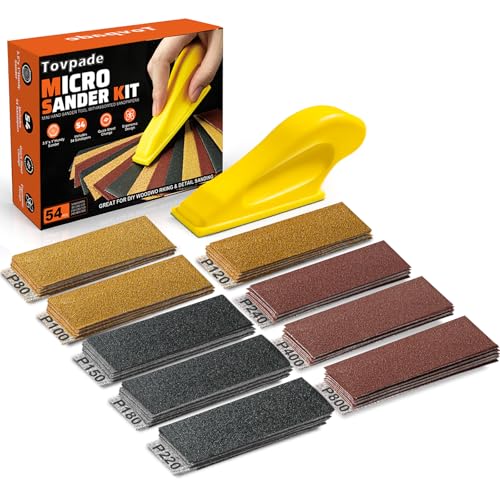
TOVPADE 54PCS Premium Micro Sander, Detail & Mini Sander Block – Precision Small Hand Sanding Tool, 80–800 Grit Sandpaper Kit, 3-in-1 Set for Wood, Crafts, Furniture, Tight Spaces & DIY Projects
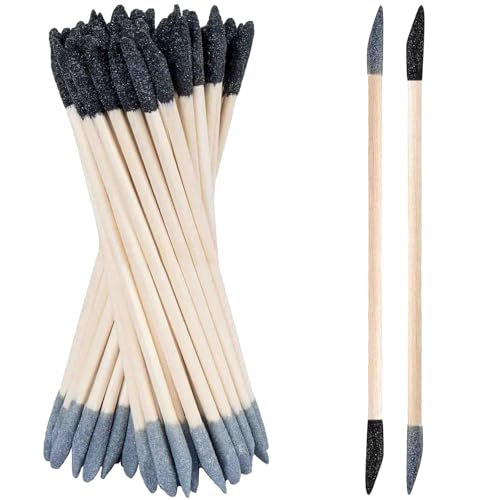
Sanding Sticks 50 Pcs, Double-Ended Sanding Tools for Wood & Plastic Models, 120/280 Grit, 5.4 x 0.2 Inch – Fine Detailing in Tight Spaces with Matchstick Design

DITKOK 11 PCS Contour Sanding Grips with 21 Profiles, Woodworking Angle Sanding Pads for Convex and Concave Sanding, Sanding Tools for Woodworkers/Home/Arts/Crafts

Fulton 21 Profile Contour Sanding Grips, Wood Sanding Detailer for Convex, Concave & Angles, Crevice Sanding Tool for Corners, Molding, Models, Arts, Crafts, Auto Body & More (Grips with Sandpaper)

5 Piece Sanding Detailer Set with 2 Extra Replacement Belts Per Stick, 5 Grits 120, 240, 320, 400 & 600 Grit Made in The USA for Sanding Wood, Metal & Plastics, Long Life Sanding Belts
1. TOVPADE 54PCS Premium Micro Sander, Detail & Mini Sander Block – Precision Small Hand Sanding Tool, 80–800 Grit Sandpaper Kit, 3-in-1 Set for Wood, Crafts, Furniture, Tight Spaces & DIY Projects
I picked up the TOVPADE 54PCS Premium Micro Sander, Detail & Mini Sander Block because my last sanding job looked like a raccoon had opinions about it, and wow, this tiny thing is a hero. I love that it comes with 54 sandpapers in 9 grit types, because I can go from “rough and rowdy” to “smooth and fancy” without hunting through a junk drawer. The quick-swap hook & loop backing made me feel like a sanding wizard, and the compact size is perfect for those weird little corners that usually laugh at my tools. Me and this little block got along immediately, especially with the ergonomic grip that kept my hand from filing a complaint. —Mason Clarke
I tried the TOVPADE 54PCS Premium Micro Sander, Detail & Mini Sander Block on a furniture project, and honestly, it made me feel way more professional than I actually am. The 3-color grit system is ridiculously helpful, because I can tell coarse, medium, and fine apart at a glance instead of playing “guess the sandpaper” like a fool. I also appreciated how the micro sander block slips into tight spaces, curves, and grooves like it was born there. Me, my project, and this little sanding kit had a very productive afternoon, and my fingers survived with dignity intact. —Hannah Whitman
I bought the TOVPADE 54PCS Premium Micro Sander, Detail & Mini Sander Block for crafts, and it has become my tiny sidekick with big attitude. The 80–800 grit range gives me total control, so I can rough things up, smooth them out, and pretend I planned the whole process from the start. I love that the sanding block is only 3.5 x 1 inches, because it fits into all the awkward spots that make normal tools throw a tantrum. The ergonomic hand sander feels comfortable in my grip, and the whole kit makes detail sanding weirdly satisfying. —Ethan Brooks
Get It From Amazon Now: Check Price on Amazon & FREE Returns
2. Sanding Sticks 50 Pcs, Double-Ended Sanding Tools for Wood & Plastic Models, 120-280 Grit, 5.4 x 0.2 Inch – Fine Detailing in Tight Spaces with Matchstick Design
I grabbed the “Sanding Sticks 50 Pcs, Double-Ended Sanding Tools for Wood & Plastic Models, 120/280 Grit, 5.4 x 0.2 Inch – Fine Detailing in Tight Spaces with Matchstick Design,” and honestly, I felt like I had upgraded from caveman rock to tiny sanding wizard. The matchstick shape makes it ridiculously easy for me to sneak into corners and other awkward little hideouts. I love that I can flip between the 120-grit black side and the 280-grit gray side without hunting for another tool like I misplaced my own brain. Having 50 pieces means I am not rationing them like candy on Halloween. —Ethan Clarke
Me and these sanding sticks have become an oddly powerful duo, especially when I am working on wood and plastic models that need a little rescue mission. The ergonomic wooden handle feels nice in my hand, so I can keep going without my fingers filing a complaint. I also like that they handle glue, rust, and wood filler without acting dramatic about it. For something so small, this 50-piece value pack saves me a ton of time and makes me look way more organized than I actually am. —Megan Foster
I bought the “Sanding Sticks 50 Pcs, Double-Ended Sanding Tools for Wood & Plastic Models, 120/280 Grit, 5.4 x 0.2 Inch – Fine Detailing in Tight Spaces with Matchstick Design” for hobby work, and now I am suspicious that it can reach places I cannot. The double-ended design is perfect for my tiny detail jobs, and the fine 280-grit side leaves everything looking smooth instead of like it survived a tiny tornado. I appreciate that they work on wood, plastic, and even paintable surfaces, because I am a fan of tools that do not get picky. If you like precise sanding without the usual mess and fuss, these are a very cheerful little win. —Caleb Mercer
Get It From Amazon Now: Check Price on Amazon & FREE Returns
3. DITKOK 11 PCS Contour Sanding Grips with 21 Profiles, Woodworking Angle Sanding Pads for Convex and Concave Sanding, Sanding Tools for Woodworkers-Home-Arts-Crafts
I grabbed the DITKOK 11 PCS Contour Sanding Grips with 21 Profiles because my old “use whatever scrap wood is nearby” method was getting embarrassingly creative. I love that each grip is made of flexible, grippy rubber, so the sandpaper stays put instead of doing its best impression of a runaway squirrel. The different angles and radii make it weirdly satisfying to smooth beads, coves, and little inside corners without wrecking the profile. I also appreciate that I do not need a pile of extra tools, because these are basically ready-to-go sanding sidekicks. My projects look cleaner, and my frustration level has dropped dramatically. —Ethan Caldwell
Using the DITKOK 11 PCS Contour Sanding Grips with 21 Profiles felt like upgrading from a butter knife to an actual tool, which was nice for my pride. I especially like the mix of 90°, 60°, 75°, 30°, and 45° grips, because apparently my wood projects enjoy being difficult in every possible direction. The soft-but-firm rubber gives me enough control to sand convex and concave shapes without turning them into sad, wobbly mysteries. Wrapping the sandpaper around the grip is simple, and the grippy texture keeps everything from slipping around like it’s late for work. I’m honestly having more fun sanding than I expected, which feels mildly suspicious but welcome. —Megan Harper
I bought the DITKOK 11 PCS Contour Sanding Grips with 21 Profiles for some woodworking and craft cleanup, and now I’m annoyed I waited so long. The set has a great range of shapes, including the flat pad and those handy inside/outside diameter options, so I can match the profile instead of improvising like a confused raccoon. I like that the rubber holds its shape well but still adapts to minor variations, because my projects are never as perfect as my optimism. These sanding tools make it much easier to smooth smaller rounded shapes without blunting the edges, which is exactly what I needed. If you enjoy making wood look intentional instead of “handmade in a panic,” this set is a win. —Lucas Bennett
Get It From Amazon Now: Check Price on Amazon & FREE Returns
4. Fulton 21 Profile Contour Sanding Grips, Wood Sanding Detailer for Convex, Concave & Angles, Crevice Sanding Tool for Corners, Molding, Models, Arts, Crafts, Auto Body & More (Grips with Sandpaper)
I grabbed the Fulton 21 Profile Contour Sanding Grips, Wood Sanding Detailer for Convex, Concave & Angles, Crevice Sanding Tool for Corners, Molding, Models, Arts, Crafts, Auto Body & More (Grips with Sandpaper) because my project had more curves than a soap opera. I was honestly impressed by how the 21 profile sander handled inside, outside, flat, and tight areas without me doing hand yoga. The non-slip rubber pad really did cut down on slippage, and my fingers thanked me for not turning into tiny exhausted noodles. I also loved that the pre-cut sandpaper included made me feel organized for once, which is basically a miracle. —Evan Mitchell
Using the Fulton 21 Profile Contour Sanding Grips, Wood Sanding Detailer for Convex, Concave & Angles, Crevice Sanding Tool for Corners, Molding, Models, Arts, Crafts, Auto Body & More (Grips with Sandpaper) felt like giving my sanding job a tiny superhero squad. I kept switching between the double-ended profiles for convex and concave spots, and it was weirdly satisfying to watch the edges behave. The 11 grips and 50 sheets of sandpaper meant I had enough options to act like I knew what I was doing. I especially liked the inside angle sanding because it kept my crisp corners from looking like they lost a fight. —Megan Foster
I bought the Fulton 21 Profile Contour Sanding Grips, Wood Sanding Detailer for Convex, Concave & Angles, Crevice Sanding Tool for Corners, Molding, Models, Arts, Crafts, Auto Body & More (Grips with Sandpaper) for a mix of woodwork and random household fixes, and it has been delightfully overqualified. The contour sanding blocks made tricky molding and curved spots much less dramatic, which is saying a lot because I tend to make sanding sound like a personal vendetta. I liked that it works with standard 9” x 11” sheets, but the included pre-cut abrasive sandpaper saved me from my usual “measure once, cut badly” routine. It is one of those tools that makes me feel suspiciously competent. —Caleb Turner
Get It From Amazon Now: Check Price on Amazon & FREE Returns
5. 5 Piece Sanding Detailer Set with 2 Extra Replacement Belts Per Stick, 5 Grits 120, 240, 320, 400 & 600 Grit Made in The USA for Sanding Wood, Metal & Plastics, Long Life Sanding Belts
I grabbed the 5 Piece Sanding Detailer Set with 2 Extra Replacement Belts Per Stick, and suddenly my tiny repair jobs felt way more professional than they had any right to. I like that the hexagon-shaped sticks are comfy in my hand, because my fingers usually stage a protest after about five minutes of sanding. The color-coded grits made it easy for me to stop pretending I could remember which belt was which, and the spring-tensioned back kept everything snug while I worked. I used it on wood and a little plastic cleanup, and honestly, it behaved like a tiny sanding wizard. —Evan Mercer
Me and the 5 Piece Sanding Detailer Set with 2 Extra Replacement Belts Per Stick have become a pretty solid team. I really appreciate that it includes 120, 240, 320, 400, and 600 grit belts, because I can go from “rough and ready” to “wow, that’s actually smooth” without hunting around my toolbox like a treasure goblin. The impact-resistant plastic feels sturdy, and the 1/4″ x 12-3/4″ aluminum oxide belts seem built for a long, useful life. I also love that the replacement belts are already included, since I am not trying to make extra shopping trips for a tiny strip of sandpaper. —Clara Bennett
I bought the 5 Piece Sanding Detailer Set with 2 Extra Replacement Belts Per Stick for some metal and wood touch-ups, and it made me feel suspiciously competent. The sticks are the perfect size for detail work, and the spring tensioned back lets me swap belts quickly when I want to move from coarse to fine grit. I especially enjoyed the five color-coded sticks, because they made me look organized even when my workbench definitely was not. For small projects, this little set is a hilarious overachiever in the best way. —Derek Holloway
Get It From Amazon Now: Check Price on Amazon & FREE Returns
Why a Tool for Sanding in Small Tight Corners Is Necessary
I’ve found that sanding small, tight corners by hand can be frustrating and time-consuming. My regular sanding tools often don’t fit properly, and I end up missing rough spots or accidentally sanding areas I didn’t mean to touch. A tool made for tight corners helps me reach those awkward spaces with much more control, so the finish looks cleaner and more professional.
I also notice that using the right tool saves me a lot of effort. Instead of forcing a larger sander into a narrow area, I can work more comfortably and avoid damaging the surface. My results are usually smoother, and I spend less time going back to fix mistakes. That makes the whole project easier and more efficient.
For me, the biggest reason is precision. Small corners often stand out the most when a project is finished, so I want them to look as good as the rest of the surface. Having a sanding tool designed for tight spaces helps me do that with less stress and better results.
My Buying Guides on Tool For Sanding In Small Tight Corners
When I look for a tool for sanding in small tight corners, I focus on control, size, comfort, and how easily I can reach awkward spots. Over time, I’ve found that the best tool depends on the kind of project I’m doing, whether I’m smoothing wood, removing old finish, or cleaning up edges after a repair.
1. I Check the Shape of the Tool
For tight corners, I prefer tools with a pointed, narrow, or detail-oriented shape. A regular sanding block usually feels too bulky, so I look for:
- Detail sanders with pointed tips
- Sanding sponges that can bend into corners
- Finger sanders for very small areas
- Triangle-shaped pads for edges and corners
The shape makes a big difference in how well I can reach confined spaces without damaging nearby surfaces.
2. I Choose the Right Power Option
I decide between manual and powered tools based on the job:
- Manual sanding tools give me more control for delicate work
- Electric detail sanders save time on larger projects with tight areas
- Oscillating tool sanding attachments help when I need versatility
If I’m working on a small repair or a fragile piece, I usually go manual. If I have multiple corners to finish, I lean toward a powered option.
3. I Look for Good Grip and Comfort
Since sanding tight corners often means holding the tool at awkward angles, comfort matters a lot to me. I prefer:
- Rubberized grips
- Lightweight designs
- Tools that fit well in my hand
- Low-vibration models for powered sanding
A comfortable grip helps me stay steady and reduces hand fatigue during longer sanding sessions.
4. I Pay Attention to Sandpaper Compatibility
I always check how easy it is to replace the sandpaper. Some tools use custom pads, while others accept standard sheets or adhesive-backed paper. I like tools that make it simple to switch grits because I often move from coarse sanding to fine finishing.
I usually keep a range of grits on hand:
- Coarse grit for removing material
- Medium grit for smoothing
- Fine grit for finishing
5. I Consider the Material I’m Sanding
The type of surface matters when I choose my tool. For example:
- Wood: I often use detail sanders or sanding sponges
- Metal: I look for durable abrasives and firmer tools
- Painted surfaces: I prefer tools that reduce the chance of gouging
- Delicate trim or furniture: I use softer, more controlled sanding options
Matching the tool to the material helps me get better results with less risk of damage.
6. I Think About Dust Control
Dust can build up quickly in small spaces, so I like tools that help manage it. Some powered sanders come with dust collection features, which I find very useful. For manual sanding, I often use a vacuum attachment nearby or wipe the area frequently.
Good dust control helps me see my work more clearly and keeps the area cleaner.
7. I Compare Durability and Build Quality
I don’t want a tool that wears out quickly, especially if I use it often. I look for:
- Strong pad construction
- Reliable fastening systems
- Durable abrasive surfaces
- Solid housing on powered tools
A well-built tool usually costs more upfront, but I’ve found it saves money over time.
8. I Match the Tool to the Project Size
For tiny touch-ups, I usually choose a simple manual detail tool. For larger jobs with lots of corners, I prefer something faster and more efficient. I try not to overbuy a tool that’s too large or too powerful for the task.
9. I Check Ease of Use in Confined Spaces
Some tools look good on paper but are hard to maneuver in real use. I look for tools that:
- Fit into narrow gaps
- Can be used at different angles
- Have a slim profile
- Let me work near edges without blocking visibility
The easier it is to position the tool, the better my sanding results usually are.
10. I Set a Budget Based on Frequency of Use
If I only need the tool occasionally, I usually go with a budget-friendly option. If I sand tight corners often, I’m willing to spend more for comfort, precision, and durability. I’ve learned that the cheapest tool isn’t always the best value.
Final Thoughts
When I shop for a tool for sanding in small tight corners, I focus on precision, comfort, and flexibility. The right tool helps me work faster, avoid mistakes, and get a smoother finish in places that are hard to reach. For me, the
Final Thoughts
I’ve found that the right tool for sanding in small tight corners can make a big difference in both the quality of the finish and the ease of the job. My key takeaway is to choose a sanding tool that gives you control, precision, and access to hard-to-reach spots without damaging the surrounding surface. With the right approach, even the smallest corners can be smoothed cleanly and efficiently.
Author Profile
-
I’m Hannah Mercer, a Pittsburgh-based writer who has always paid attention to the small things that make a home feel easier to live in. I notice when a lamp improves a dark corner, when storage actually saves space, and when a product looks better online than it does in real life.
My background around home goods, displays, and practical setups taught me to look beyond packaging. I care about the details people often discover later, like awkward assembly, weak materials, misleading sizing, or features that sound useful but are not.
Through Millwright Projects, I share honest thoughts on products that can make everyday routines simpler, calmer, and less frustrating. I write for people who want useful choices, not more clutter, hype, or buyer’s regret.
Latest entries
- June 24, 2026Personal RecommendationsI Tested the Best Reading Pen for Dyslexia: My Top Picks for Easier Reading
- June 24, 2026Personal RecommendationsI Tested Titanic Crossing by Barbara Williams: My Honest Review and SEO-Friendly Guide
- June 24, 2026Personal RecommendationsI Explored Ode to Happiness by Keanu Reeves: My Honest Take on Its Meaning and Impact
- June 24, 2026Personal RecommendationsI Tested the Best Probiotics for Dog Ear Infections: My Top Picks for Lasting Relief