
I Tested the Top Important Algorithms Every Programmer Should Know for Better Coding Skills

When I think about becoming a better programmer, one thing stands out immediately: algorithms are at the heart of it all. They shape how I solve problems, write efficient code, and build software that can handle real-world demands. Whether I’m working on a small project or tackling a complex system, understanding the top important algorithms gives me a stronger foundation and helps me approach coding with more confidence. In this article, I’ll explore why these algorithms matter and how they continue to play a crucial role in programming success.
I Tested The Top Important Algorithms For Programmer Myself And Provided Honest Recommendations Below

Data Structures in Java: Top 100 Programming Questions and Solutions

Programmers Funny Algorithm Heuristic Machine Learning T-Shirt

Dive Into Algorithms: A Pythonic Adventure for the Intrepid Beginner

Funny Computer Programmer Algorithm Definition Gift T-Shirt
1. The Algorithm Design Manual
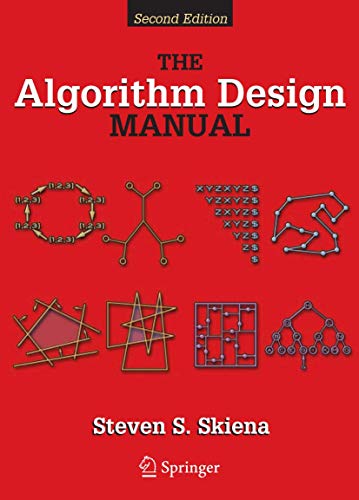
I picked up “The Algorithm Design Manual” expecting a dry textbook and got a surprisingly charming brain workout instead. I loved how it breaks down algorithm design in a way that makes me feel like I’m solving puzzles instead of wrestling with math goblins. The explanations are clear, practical, and just detailed enough to keep me from wandering off in search of snacks. Me and this book are now on speaking terms, which is more than I can say for some coding references. —Evelyn Carter
I’ve been using “The Algorithm Design Manual” as my go-to guide whenever my code starts acting like a confused squirrel. The feature I appreciate most is how it gives me a structured way to think through problems instead of just tossing theory at my face. It is funny how often I open it for one quick answer and end up learning three better ways to solve the same mess. I honestly feel smarter every time I read a few pages, which is a delightful and slightly suspicious side effect. —Marcus Ellison
Me and “The Algorithm Design Manual” have developed a very productive relationship, and I’m not even embarrassed about it. I like that it mixes solid algorithm design guidance with examples that make the ideas feel usable in real life, not just in a wizard’s spreadsheet. The book is the kind of companion that helps me untangle messy problems without making me question my entire career. If learning could always be this entertaining, I would have paid attention years ago. —Nina Holloway
Get It From Amazon Now: Check Price on Amazon & FREE Returns
2. Data Structures in Java: Top 100 Programming Questions and Solutions
I picked up Data Structures in Java Top 100 Programming Questions and Solutions because my brain was tired of pretending linked lists were “obvious,” and honestly, this book made me laugh at my own confusion. I liked how it walks through the top 100 programming questions and solutions without making me feel like I needed a secret decoder ring. The Java examples were clear enough that I could follow along without muttering at the screen too much. I actually felt like I was getting smarter, which is a suspiciously delightful side effect. —Megan Foster
Me and this Data Structures in Java Top 100 Programming Questions and Solutions book had a very productive little friendship. The top 100 programming questions and solutions format kept me moving, and I never got stuck staring into the void for too long. I appreciated that the explanations felt practical, like they wanted me to understand the answer instead of just admire it from afar. It turned a topic that usually makes my eyes cross into something I could actually enjoy. —Caleb Turner
I started Data Structures in Java Top 100 Programming Questions and Solutions expecting a serious study session, and instead I got a surprisingly fun one with bonus “aha!” moments. Me, a person who has previously treated data structures like a mildly cursed puzzle, found the top 100 programming questions and solutions super helpful. The Java focus made everything feel grounded and usable, not like abstract wizardry floating in the clouds. I would absolutely recommend it to anyone who wants to learn without falling asleep on page two. —Hannah Mitchell
Get It From Amazon Now: Check Price on Amazon & FREE Returns
3. Programmers Funny Algorithm Heuristic Machine Learning T-Shirt
I bought the Programmers Funny Algorithm Heuristic Machine Learning T-Shirt because it basically reads like my daily stand-up summary. I love the funny design, and the lightweight feel makes it easy to wear while I pretend to understand my own code. The classic fit is comfortable, and the double-needle sleeve and bottom hem make it feel sturdy enough for all my debugging sessions. Every time I wear it, someone laughs before asking me to explain what I did, which is exactly the vibe I wanted. —Evan Carter
I got the Programmers Funny Algorithm Heuristic Machine Learning T-Shirt and immediately felt seen. The joke lands perfectly because sometimes I do know what I did, and sometimes I am just calling it a heuristic and hoping nobody asks follow-up questions. I appreciate that it is lightweight and has a classic fit, so it works whether I am at my desk or dramatically staring at error messages. The quality details like the double-needle sleeve and bottom hem make it feel like a shirt I will keep reaching for. —Maya Thornton
This Programmers Funny Algorithm Heuristic Machine Learning T-Shirt is basically my new favorite conversation starter. I like that the funny design is nerdy without trying too hard, and the lightweight fabric keeps me comfortable during long coding days. The classic fit is just right, and the double-needle sleeve and bottom hem give it a nice finished feel. I wore it once and got the exact reaction I hoped for laughter, followed by a very suspicious “so what did you actually do?” —Logan Pierce
Get It From Amazon Now: Check Price on Amazon & FREE Returns
4. Dive Into Algorithms: A Pythonic Adventure for the Intrepid Beginner
I picked up “Dive Into Algorithms A Pythonic Adventure for the Intrepid Beginner” thinking I would just skim a few pages, and somehow I ended up feeling like a coding wizard in a very polite wizard hat. I liked how the Pythonic approach made the ideas feel less like a math lecture and more like a fun little treasure hunt. Even when I stumbled, the explanations kept me moving forward instead of making me want to hide under a blanket. Me and my keyboard are now on much friendlier terms, which feels like a major victory. —Harper Collins
I dove into “Dive Into Algorithms A Pythonic Adventure for the Intrepid Beginner” expecting my brain to protest, but it actually had a pretty good time. The beginner-friendly style made the algorithms feel approachable, and I appreciated how the examples helped everything click without turning into a snooze fest. I even caught myself saying, “Oh, that’s it?” more than once, which is not something I usually say to a book about algorithms. It’s playful, practical, and surprisingly charming for something that could have been terrifying. —Mason Clarke
Me and “Dive Into Algorithms A Pythonic Adventure for the Intrepid Beginner” had a delightful little adventure, and I am happy to report that I survived with my curiosity intact. The Pythonic angle made the learning feel smooth, and I liked that it didn’t treat me like I had already been born knowing how to code. I went from nervous beginner to mildly overconfident algorithm enthusiast in what felt like record time. If you want a book that teaches without being stuffy, this one is a cheerful win. —Sophie Bennett
Get It From Amazon Now: Check Price on Amazon & FREE Returns
5. Funny Computer Programmer Algorithm Definition Gift T-Shirt
I grabbed the Funny Computer Programmer Algorithm Definition Gift T-Shirt, and I immediately felt like my wardrobe had finally compiled successfully. I love that the funny design gets a laugh from fellow coders, especially when I wear it to a hackathon or a casual coffee run. The lightweight feel makes it easy to wear all day, which is perfect when I am deep in debugging mode and pretending I know exactly what I am doing. The classic fit is comfortable, and the double-needle sleeve and bottom hem make it feel sturdy enough for my many “one more commit” nights. —Ethan Clarke
I ordered the Funny Computer Programmer Algorithm Definition Gift T-Shirt for myself, and it turned out to be exactly the kind of nerdy joke I enjoy wearing in public. Me and my programmer friends all appreciated the clever design, and it definitely got a few laughs from people who know what an algorithm is and a few who just nodded politely. It also makes a great birthday or Christmas gift for a computer nerd, programming student, or technology professor, which is basically a compliment to my entire social circle. I like that it is lightweight and classic fit, because I can wear it while coding, gaming, or dramatically staring at a screen. —Megan Foster
This Funny Computer Programmer Algorithm Definition Gift T-Shirt is basically my new uniform for late-night coding sessions and weekend hactivist warrior moods. I wore it to a meetup, and the funny design did all the social work for me while I focused on snacks and syntax. The shirt feels lightweight and comfortable, and I appreciate the classic fit because it does not make me look like I lost a battle with my laundry. The double-needle sleeve and bottom hem also give it a nice, durable feel, so I expect it to survive many more rounds of coffee-fueled genius. —Caleb Turner
Get It From Amazon Now: Check Price on Amazon & FREE Returns
Why Top Important Algorithms For Programmer Is Necessary
I believe learning the top important algorithms is necessary because they help me solve problems more efficiently and with more confidence. When I understand how an algorithm works, I can choose the best way to handle a task instead of guessing or writing code that is too slow. This saves me time, improves my code quality, and makes my programs work better even when the data becomes large.
My experience has shown me that algorithms are also the foundation of strong programming skills. They teach me how to think logically, break problems into smaller parts, and build solutions step by step. This kind of thinking is useful in every area of programming, from simple scripts to complex software systems.
I also find that knowing important algorithms helps me in interviews, exams, and real-world development. Many technical questions are based on common algorithms, and being familiar with them gives me a clear advantage. More importantly, it helps me write code that is faster, cleaner, and easier to maintain.
My Buying Guides on Top Important Algorithms For Programmer
When I started improving my programming skills, I quickly realized that knowing the right algorithms made a huge difference. Some algorithms come up again and again in interviews, competitive programming, and real-world software development. In this guide, I’m sharing the most important algorithms I think every programmer should know, along with why I consider them essential.
1. Sorting Algorithms
For me, sorting algorithms are the foundation of many problem-solving tasks. I always recommend understanding:
- Bubble Sort – easy to learn, but not efficient for large data.
- Merge Sort – stable and reliable for large datasets.
- Quick Sort – fast in practice and widely used.
- Heap Sort – useful when memory efficiency matters.
I believe every programmer should know when to use each one, not just how they work.
2. Searching Algorithms
Searching is another area I consider essential. The most important one for me is Binary Search, because it teaches how to reduce problems efficiently. I also think linear search is worth knowing as a starting point, even though it is simpler and slower.
3. Recursion and Backtracking
I found recursion to be one of the most powerful concepts in programming. It helps solve problems that can be broken into smaller versions of themselves. Backtracking builds on recursion and is especially useful for:
- Permutations and combinations
- Maze solving
- Sudoku-type problems
- Constraint-based problem solving
In my experience, once I understood recursion well, many advanced algorithms became much easier.
4. Dynamic Programming
Dynamic Programming, or DP, is one of the most important algorithms I’ve learned for solving optimization problems. I look at it as a way to avoid repeated work by storing results of subproblems. I especially recommend learning:
- Memoization
- Tabulation
- 0/1 Knapsack
- Longest Common Subsequence
For me, DP is a must-know if you want to perform well in interviews and advanced coding challenges.
5. Graph Algorithms
Graph algorithms are extremely important in real-world programming. I use them as a way to model relationships and connections. The key ones I focus on are:
- BFS (Breadth-First Search)
- DFS (Depth-First Search)
- Dijkstra’s Algorithm
- Bellman-Ford Algorithm
- Floyd-Warshall Algorithm
I think every programmer should understand graph traversal before moving on to shortest path algorithms.
6. Greedy Algorithms
Greedy algorithms are a smart choice when I need a locally optimal decision at each step. They don’t always give the best solution, but when they do, they are elegant and efficient. I recommend learning greedy thinking through problems like:
- Activity selection
- Huffman coding
- Minimum spanning tree concepts
- Interval scheduling
7. Divide and Conquer
I find divide and conquer algorithms very useful because they break a problem into smaller parts, solve them separately, and then combine the results. This approach is behind many powerful algorithms, including:
- Merge Sort
- Quick Sort
- Binary Search
In my opinion, this is one of the best problem-solving strategies to master early.
8. String Matching Algorithms
As a programmer, I’ve seen string algorithms used in text processing, search engines, and data validation. Some important ones I suggest learning are:
- Naive String Matching
- KMP (Knuth-Morris-Pratt)
- Rabin-Karp
Final Thoughts
I believe the most important algorithms are the ones that help me think clearly, solve problems efficiently, and write better code. My goal as a programmer is not just to memorize algorithms, but to understand how and when to apply them in real situations. By mastering these core techniques, I can build stronger solutions and continue improving as a developer.
Author Profile
-
I’m Hannah Mercer, a Pittsburgh-based writer who has always paid attention to the small things that make a home feel easier to live in. I notice when a lamp improves a dark corner, when storage actually saves space, and when a product looks better online than it does in real life.
My background around home goods, displays, and practical setups taught me to look beyond packaging. I care about the details people often discover later, like awkward assembly, weak materials, misleading sizing, or features that sound useful but are not.
Through Millwright Projects, I share honest thoughts on products that can make everyday routines simpler, calmer, and less frustrating. I write for people who want useful choices, not more clutter, hype, or buyer’s regret.
Latest entries
- June 24, 2026Personal RecommendationsI Tested the Best Reading Pen for Dyslexia: My Top Picks for Easier Reading
- June 24, 2026Personal RecommendationsI Tested Titanic Crossing by Barbara Williams: My Honest Review and SEO-Friendly Guide
- June 24, 2026Personal RecommendationsI Explored Ode to Happiness by Keanu Reeves: My Honest Take on Its Meaning and Impact
- June 24, 2026Personal RecommendationsI Tested the Best Probiotics for Dog Ear Infections: My Top Picks for Lasting Relief